9/8/09

What I really should have said...

Seems a lot of folks have been approaching me lately about Eastern European music here in Austin. I can see why too, as I've been playing Jewish Dance music (aka "klezmer') here and abroad since I first moved here in 1989. I don't wish to sound entirely discouraging about it, but a person's intentions completely speak to the end product. And my life in folk music has been shaped by the people who I learned from. Who were, trust me, far less amiable in expressing these concepts that I.

As I return tonight from a weekend of work in NYC with Jewish clarinetist-Bluegrass mandolinist non pareil Andy Statman, the ad hoc Balkan Brass Band Veveritse and others, I'm starting to formulate a handy FAQ on why maybe I'm not the guy you want to talk to.


a) Music is functionary to context.

As much as I enjoy listening to and being inspired by, lets use simply as one example, Romanian Lautari music, the simple fact is that there isn't anyone here in Austin TX who wants to hear it. If there is no wedding, no christening or restaurant gig, then why take the time and energy to crank out a low grade version to play in front of audiences that wouldn't be able to discern the difference between no good and no, good! Submitted for evidence: What I've found in my many years in this community is that the Jews of Texas, a mighty fully assimilated bunch of folks, don't much care for the kind of Jewish music I play. It's attached to Yiddish speaking culture that they either can't remember or in the case of fervent Zionists, reject entirely. Thus, I don't get any calls to play simchas here, even though after over a decade of study the musicians I work with locally are as competent and fine as you'll encounter anywhere. There's just no demand for the service I provide here. I do get work every where else there is a culturally active Jewish community, say like the East Coast (who would have thunk?) and without much irony, parts of Europe where it never existed in the first place.

Many years ago, I became entranced with the Oud and the sounds of the Magreb and points East. I sought out a teacher, which is what you are supposed to do when you wish to really learn something. But he wouldn't show me a thing on the instrument, not how to tune it, nothing, until I explained myself. Why, he inquired, do you want to play the Oud? It is not your music. There is no possible way you will ever understand the music it makes, he explained, as it takes the study of a lifetime to comprehend not only the tonalities but the purpose and context in which the instrument exists. It was not until I had outlined my goals completely, and to his satisfaction, that he started my instruction. (For the record, I told him I was interested in the Oud only where it intersected with Western cultures, in the form of the Greek Oriental Rembetika tradition which has historically informed the Hassidic and other Eastern European Jewish music's of which I had made a decade long study at that point.) I have a feeling most of these young kids playing folk music today have never been challenged in that way. And more's the pity.


b) "Coals to Newcastle"

Here in Texas we have AMAZING living music traditions, with Tejano, Tex-Polish, Tex-Czech and French language music’s all indigenous to the region. Shuffle blues, honky tonk, Texas swing, white folks got some great music here too.


Who, really, moves to Austin TX to play Balkan music? Someone who wants to be as far away from the Balkans, and anyone who could call out a charlatan as possible, that's who. What possible explanation can you conclude?

There's a whole tribe of "New Orleans" jazz musicians who reside and work here in Austin simply because they possess neither the skills or stomach to actually go to New Orleans where, strangely enough, there is a built in demand for New Orleans Jazz. It's far more comfortable to sit 8 hours to the west and not ever have to see if you really could “make it” in the proper context. Bluegrass lives in Tennessee. Be-Bop and Free Jazz in Chicago and New York. Balkan music lives in the Balkans and when you drink this far from the well, the water is mighty foul indeed.

Conversely, Texas music has changed the world, and people leave their homes and lives elsewhere every day to come here and take it in. Personally, it's idiotic not to soak it all up, as it flows from the tap here. If, that is, you have the ears to hear it.

c) A "cultural dilettante" is the worst pejorative in my personal vocabulary.
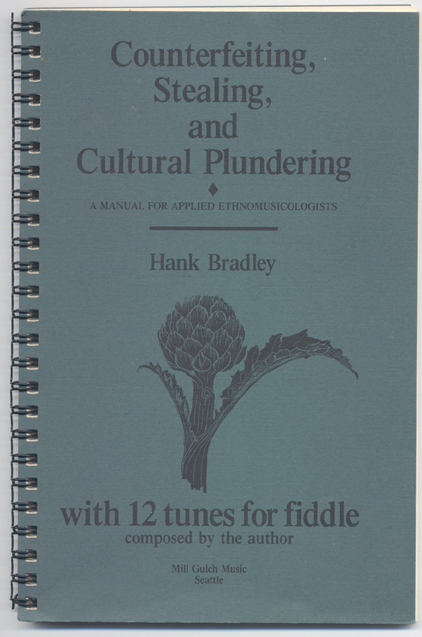
I won't go into the whole flaming screed, but I strongly suggest you pick up a copy of Hank Bradley's amazing essay "Counterfeiting, stealing, and cultural plundering
A manual for applied ethnomusicologists." He makes my argument, but without the bitter recriminations that I am famous for. Suffice it to say that when someone not of a culture approaches me about playing music of a culture, the only thing I could think of is "what is it about yourself and your own people that you find so distasteful that you feel the need to suck off some one else's'?" Over the years, I've been shown some amazing examples of historical dissonance that has tempered my tone quite a bit. But I think you get my point.

d) Play "with," not "like."

Music is fun. It's amazing and wonderful and healing and a conduit to the ineffable. But music is simply just one small facet of a greater diamond that represents a culture, and thus can also be precious and fragile. I don't begrudge anybody a gig; if you want to call yourself "gypsy-punk-klezmer-balkan-circus" whatever all you like. It's a free country. But I prefer to play Lautari music with actual Lautari musicians in situations where they expect Lautari music to be played. And the simple truth is: you could too. All you have to do, as LBJ famously remarked, "is everything you have to do." Life is WAY TOO SHORT to be screwing around, people. Get out there and do it, not just some lame half-assed version of it that a denatured and decontextualized society will let you get away with.

Playing a watered down, second rate version of a beautiful musical tradition far removed from its context and community with like minded hobbyists isn't going to get you anywhere. Not anywhere you'd really want to be ultimately, I hope.


(See Manifesto for a New Year, dated 2007 for even further context on music and intention.)


8/21/09

A note on success in the market place from Danny Barnes.


In the last year or so I have kept up a daily communication with my old business partner and "Fearless American Weirdo" Danny Barnes. It's been a wild mix of medias: iPod pics, tetxts, emails and YouTube links. We hardly speak in fact except at the odd Bad Livers reunions (next one and last one on the books, Novemeber 20, Old Town School of Folk, Chicago IL, double bill with the Hot Club of Cowtown.)

Here's a typical chestnut of wisdom from him:

"the stanford research institute says that the money you make in any endeavor is determined only 12.5 percent by knowledge and 87.5 percent by your ability to deal with people."

later another quote is "what you will become in five years will be determined by what you read and who you associate with."

Frankly, that explains a lot to me!!

Here's one of the many bands he's been hipping me too as well:


Danny's got a new CD coming out in the fall, and it's a breathtaking master work. No foolin'. Check it out.


7/30/09

Brian Marshall delves into Texas Polish-Jewish Connections

"If it had not been for a Jewish merchant we could have ended up in New Jersey or some other God awful place!!!!!!"

That's the email title I got from Texas Polish Dance Band Fiddler Brian Marshall, and it's meant as a compliment. Evidently he's found that his kin folk, along with most of the second wave of immigration of Texas Polonia were encouraged to move to Texas by one James Meyer Levi, a Polish Jew and Confederate Civil War Veteran.

He continues: "New Waverly, Texas, is located thirteen miles south of Huntsville on State Highway 75 and Interstate Highway 45 in southern Walker County. The Houston and Great Northern Railroad Company founded it, after the residents of what became Old Waverly refused to grant the railroad a right of way through their community. A group of Walker County cotton planters met in a general store at Old Waverly, Texas on September 19, 1866, to discuss their problems in securing workers. Meyer Levi, a merchant who had various holdings in the state, owned the store.

There were twelve planters who gathered at the meeting for the purpose of recruiting laborers from Europe. The members established themselves as ‘The Waverly Emigration Society” and commissioned Meyer Levy to travel to Europe to recruit 150 “foreign laborers” to work on their lands. Each planter requested a certain number of workers with specific skills. The planters agreed to play for the passage of the immigrants to Texas and to play the men $90, $100, and $110 for their work in their work in their first, second, and third years in America. The women would receive $20 less for their labors each year. Meyer Levy agreed to go to his native Poland and recruit workers. Forty-five families totally 143 persons arrived in New York on April 9, 1867. After a short difficulty with travel funding, they then traveled by ocean from New York to Galveston, Texas.

In 1870 the Great Northern Railroad Company laid its’ tracks ten miles west of Old Waverly and set aside a town site know as Waverly Station. The new community attracted many residents of Old Waverly, and the new town’s name was soon changed to New Waverly. Because so many of the original group of Polish immigrants followed to New Waverly it was called the “Cradle of Polish Immigration” in this part of Texas. While most of the first Polish immigrants made their homes in New Waverly, many eventually migrated to the surrounding counties."

Visit Polish Texans website for more information about this fascinating Polish Diaspora community.

6/16/09

There's Way Too Much On YouTube...

..that you may have missed. I find it, and share it with you so you can have a productive life.

Here's a collection of music in it's most natural state, in context and live. Hope you enjoy.

From a Serbian bar, here's Aca Nikolic Cergar:


Serbia again, looks like a backstage rehearsal at the Guca Festival with Demiran Cerimovc Orkestar, that year's winner:

Another Guca favorite, Vranjski Biserli playing a very upbeat Edersedzli on a morning talk show

Here's an inpromyu street jam with some out of towners in Vranska Banja, home to many fine brass band players in Serbia. Come with me now to old Mexico, the State of Sinaola in fact, home of the big brass Bandas. Sit in on this rehearsal of Banda Libertad de Guamichil (and dig the tuba player who kills it!)

Follow me down to the beach with the Buccaneer Band of Mazatlan.

Here's a Son Jarocho band tackling one of my all time favorite numbers, El Cascabel! In my heaven, harps sound like this:

Well, I think this is what happens when two ditsy French chicks pick up a couple of Romanian Lautari and head back to the hotel. I think...

Here's what looks to ba a social gathering of some sort in Romania, street music provided by the Fanfara din Toflea.

Further East, at least I think, here's the scene at a Moldavian Wedding. Screw the band, let's see those dancers. Sirba!!

Ah, the mariachis of Romania. A little table music?

Here's as fine an example of a Romanian a village taraf as you will find. This could have been filmed 100 years ago.Cristi Geagu Catâroiu on lead violin.

Welcome to the living room of the Pavlovic Family, where daddy Branko plays the hell out of the brac!!

We all owe a great debt to these folks wwho are giving these little glimpses into their world. Hopefully with technology like this, we can put aside the lie of otherness between peoples and we can finally recognize everyone as brothers in the family of man. That's my dancing prayer.

Today we speak of Gabi Lunca.

It's a well documented fact that I'm totally nuts about Lăutari Music from Romania and points east. As I prepare for another adventure to Europe with the Other Europeans project, I have been diving back into that rich repertoire for yet another listen. Marin Bunea, the legendary Moldovan fiddler on our tour, is like me entirely entirely enraptured in the music of singer Gabi Lunca.

There's a fine biography of her posted here, noting all the amazing musicians (the Gore Brothers, Toni Iordache, ect..) and of her rivalry with the equally amazing, if not more rough and tumble sort of singer, Romica Puceanu. But watching how she looks at her accordionist when she drops the mic down to his bellows when he solos, you don't need to be told that she was married to him!

Enjoy!


This one was a mind blower. Fans of the music of Dave Tarras will note the melody and form is identical to his tune "Gypsy" from the the amazing Columbia LP TANZ!


Here's one of those amazing "lazy 3/8ths" tempos that Romanian musicians are world famous for.

3/29/09

From the Strad magazine:


“I am not such a fanatic as to say that the occasional indifferent performance (of music) leads directly to mental or moral ruin, but I do assert that the frame of mind induced by habitual indifferent performances of music, or of any act whatsoever, and which leads to the uncritical acceptance of the same by a number of slack and devitalized intelligences is verily, a forcing house of mental and moral disease.”

Excerpted editorial, The Strad Magazine, London UK, March 1909.


What could I possibly add?

3/20/09

"Austin's King of Jewish Bluegrass Tuba"

I awoke this morning at the historic Anglican rectory just north of U. Cal Berkeley, to be shuttled to the Elmwood Elementary for a school program with Kosher Gospel singer Joshua Nelson. (Not to be confused with the lame Israeli rock singer of similar name.)

It was a wonderful bunch of kids asked probing and sensitive questions for the musicians.

Then it was a short cab ride into Southwest Berkeley to the workshop of master ukulele builder Mike DaSilva. Mike made a uke (the "Lucky Lady") for my buddy Pops Bayless and it’s quite possibly the finest constructed, sounding and playing string instrument I’ve ever encountered. And I have some mighty fine custom instruments myself. Mike took time out his busy day slicing tone woods to show me around the shop and talk ukes. I’d only ever communicated with him via email and phone and I was gratified to find such a kind and thoughtful gentleman.


Modest and quiet in person, he really does let his instruments do the talking. I’m a big fan of his historical instruments, which he had several in the pipeline and are as fine as you will encounter. But he also showed me an amazing semi-cutaway tenor he was building for James Hill, designed to accommodate his playing style. And we discussed at length his experiments with carbon fiber tops and I even put in a tentative order for a concert model (allowing funding!!)


While there, I got to see his latest line, a low cost, hand made entry-level uke. It’s an all solid Koa box in the Hawaiian style with PegHed tuners and one of his amazing new uke cases, all at $650.00!! An AMAZING value for a hand made instrument I assure you. It plays and sounds to my ear in no way appreciably different from and custom made instrument. Put in an order now.


Then it was a long stroll on an uncharacteristically warm summer day back to the rectory. On the way this caught my eye and I checked out one of the many Indian import shops on University Ave.


So here’s what’s way in the back: and that’s just a few pics. There was every imaginable bell, shaker and tambourine, and hand pump organs and stuff I couldn’t begin to identify.


After a running a short errand I was dropped off at the festival director’s house for a shabbes meal. I had arranged to meet my old pal Djordje and it seemed we were both early, so we sat down on the stoop and caught up. After a short while, a nice lady across the street called out to us a bade us come into her house. As it turned out, she was married to another musician pal of mine, John Schott and they got a call from the director telling her she was running late.


They served us tea and snacks and John’s wife (so sorry to forget her name) is a writer and had a story about he trip to Belgrade, Djordje’s hometown, back in ’89. John accompanied the story with a wonderful minstral style, 6-string banjo made by a local maker and one that I coveted immediately.


Soon enough, the director arrived along with Joshua and some of his singers and other local Yid’n, and after the barruchas we sat down to eat. Chulent, asparagus, and some of the finest BBQ Chicken I ever had. No pictures, too busy eating.

But after a cognac or two, the honored guest took to the keyboards for a few tunes.


Then off to bed. They pick us up to play on KPFA at 8am and then we go to KALW for a live broadcast on West Coast Live. Then it's the big concert tonight! It's important to note that now that it has been in print twice, I am formally "Austin's King of Jewish Bluegrass Tuba."

Sunday morning I magically turn into a Bad Liver and do shows out here Sunday and Monday. Hard to believe sometimes this is my profession.

2/10/09

Jewish Self Loathing, music edition....

To paraphrase William S. Burroughs, much like the man dressed as a woman to board the last life boat leaving the ship Titanic, we now have a new measure for deeply ingrained self loathing.

Can it be that we, the comfortably assimilated Jewry of America, have drifted so far from our roots that we must now tear down anyone who chooses to cling to them?

Submitted for your review and comment is this article from the Jewish Chronicle (UK,) entitled "Turn off the klezmer and turn up the Ramones" by Paul Lester.

(Besides being poorly written, an important affectation of "Rock" writing in England in the new post-Modernist world, it could be the very first time I've ever had an occasion to ever read the rag.)

Dig this chestnut:

There are plenty of musicians who today play very little other than the music of past centuries. Some play it for its eternal qualities. Others, however, are more concerned to convey “authenticity”.

Such musicians peddle klezmer as though it were the truest expression of the Jewish experience. They perhaps even imagine that, if there is a Jewish “voice” in music, klezmer captures it best.

But, for me, the best Jewish music — or rather, the best music by Jews — reflects the moment and is somehow a response to the times in which it was made. And if there is a “Jewish voice”, it is not to be heard in klezmer, maybe because it is being drowned out by all those clarinets, violins and accordions.

Right.

Tell Frank London that to his face. Or Aaron Alexander, or Alex Kontorovich, or... I could go on and on. Here's an authentic Jewish voice for you: Are you high?

Well, lets be honest here, there are some mighty crappy bands that "peddle" pap as culture. Yale Strom's clumsy horror show is a fine example of poor scholarship wedded to poor musicianship and presented in a an overly precious package. And there's a whole genre of low-brow, low-rent"klezmer" acts out there: Maxwell Street, Yiddiche Cup, Best Little Klezmer Band in Texas, ect..I was in one of these dog-and-pony-shows for a time (Austin Klezmorim) so I know of what I speak. I'm sure if all you had heard was that, I reckon the article's thesis would ring true. As Earl Scruggs once famously remarked when asked why Bluegrass music wasn't as popular in the 70's as it was a generation before, "It because of the lousy Bluegrass bands playing today." Emmis.

This reminds me of a similar polarization in criticism in the African American community when discussions of "jazz" and the sort of expressive musics of the avaunt guard. To my mind, this essay, like those critics, reject anything that smacks of "plantation" (or concentration camp) and promotes only those art forms which reflect the values of the dominant culture. And much like our African brothers, we kikes routinely beat the pants off the goyim even playing by their rules (see author of "White Christmas," and "Easter Parade.") Accomplishments to be rightly proud of. But here it sounds like the rant of what Black writers would call a "porch nigger" (or my favorite curse, a "kapo.") Mr. Lester has chosen an "either/or" scenario that doesn't exist in the real world.

I'm guessing too, and this is simply a guess, that Mr. Lester has never been denied admittance into a public pool for being Jewish. Nor has he has a swastika painted on his door, or a cross burnt in his lawn. Nor was he regularly quizzed about his personal association with the death of Jesus in English class. Like many today, he displays an attitude born of a life of complete enfranchisement, comfortable and safe in his identity. Nu?

And I guess I should note that I myself, a Yiddish music musician, the very kind that this writer rails against, has spent a life engrossed entirely reflective of the modern music of the culture around me. I have roadied for the Flaming Lips, provided a PA and a crash pad for Black Flag and Husker Du. My bands have opened for the Butthole Surfers, sold out shows at CBGB's and No Doubt once opened for me. I have played honky tonks across Texas with Dale Watson, Wayne Hancock, the Derailers and Don Walser (Google 'em, yankees.) I recorded a Grammy nominated CD for Tex-Mex accordion legend Santiago Jimenez, and have played festivals with members of the Savoy Family of Eunice LA. I am a first call musician in the Czech and Polish dance bands around greater Houston.

Not bragging folks, just try to explain that those of us who choose to listen to and respect the cultural gifts of our heritage generally live entirely in the here and now. And we love accordions. And clarinets. And we aren't one bit ashamed to say so. Oh, and by the way we rock out better then anyone too.

With "writers" with this sort of agenda supported by the mainstream Jewish press, it seems what I feared for many years really is true: my own community actively rejects me and my work. Why else then is it that to perform Yiddish music, I must travel back to old Europe, sometimes standing on the very spot of my extended family's destruction, to find an appreciative audience? Conversely, I have performed for my local JCC a total of 3 occasions in 15 years. How sad can it be that the children of the murderers find meaning in my culture when the children of the murdered actively despise it. I'll let Mr. Lester (ne' Lowenstein, maybe?) work that out on the couch years from now when the vacuousness of the Goldyne lands shallow consumer culture finally leaves him flat. By then, there may not be anybody left to say a kaddish. ("It doesn't really reflect the true Jewish sentiment of today" one imagines they might be heard to say.)

Once, I was told by a nice little old lady (and one time guest of the nice folks at Bergen-Belsen) once that "who needs Hitler? We have plenty enough Jews eager to end Yiddish life."

2/3/09

Mark Halata in Richmond VA

Some musicians will disagree with me I'm sure, but one of my favorite aspects about presenting and performing folk music is when you're doing so for kids. Here Tex-Czech band leader Mark Halata and I played a couple public schools while we were in Richmond to perform at the Richmond Folk Festival back in October.

Yeah, that's me singing Czech and playing a borrowed guitar on the tune Czervena Ruzika aka Red Rose Polka.

1/14/09

A personal appeal for support of Yiddish Culture

From world reknown klezmer fiddler, and single mother of 2, Marlene Segelstein:

To all of our friends, students and fans;

As you know, musicians and other self employed folks are getting socked in today's trying economic times. We've been hit really hard with tours cancelling, gigs drying up, and performance series being cut short. Those of us who make our living playing and teaching our instruments (including voice and dance!) travel the globe to play concerts and teach at workshops, and to pass along our knowledge of this music and dance that was almost wiped out in the last century. We form collaborations, sometimes with those from other cultures, to keep this art alive, and find new ways to keep it vibrant. When you see us at Klezkamp, Klezkanada, Klezfest London, Weimar,we are always happy to give as much as of our time, energy and knowledge. When possible, we are giving extra (free) lessons to folks; under the staircase, in a lobby, even in our own rooms, often when we are in a state beyond exhaustion. And of course it doesn't stop there.

At least once a day and often much more, I am answering a query to help someone with a dissertation by answering a questionnaire, providing chords for a tune, sending a copy of a sound file, or sheet music to students, friends of students, people who have found my name on the internet. Often the queries are very polite and filled with thanks, but just as often, they are two liners with no greeting, for example (a real email!):

I got your name from your website. I need the music for Hora Midor.
Please send asap.

And of course I have the music. We recorded it, and I transcribed it. And I sell it in a book that I self published. These little things are how I make my living. Now of course, I love what I do. I must. I struggle to pay my health insurance, live at a below the lower middle class level, and have sacrificed a MUCH more comfortable lifestyle to do what I love the most, play music with and for friends.

Think back. Has anyone in this small Jewish music community helped you by giving you a little extra lesson, even 15 minutes (the going rate for private lessons in the east coast are $75-100 an hour)? Has anyone helped you with your research? Filled out a questionnaire for your dissertation? Provided you with a chart? Spent extra time with you showing you a dance step? Sent you rare soundfile? Helped you fix your instrument? Generally enriched your musical life?

No, I'm not asking you to send money. I'm asking you to support us by buying our products. If you already have bought CD's and books, many thanks! Now think about buying more as gifts.

We appreciate all of the wonderful support we have received over the years from many of our friends, students and fans, and I never want to think twice about helping someone who emails or calls me with a query. I am just asking that you give back by supporting those of us who are your teachers, your favorite bands, and your friends.

Cookie Segelstein

1/3/09

On Stage with the Lautari Ensemble

A trumpet feature from the student concert at the conclusion of this years Yiddish Summer Weimar. This is the "Lautari" ensemble half of the project with quite possibly the finest living Rroma musicians today (and one very lucky gadjo on bass.)

Adam Stinga leads the suite of tunes on trumpet with Marin Bunea (violin,) Peter Ralchev (accordion,) Kalman Balogh (cimbolm,) a loutish dullard (bass,) and Adrian Receanu (clarinet.)


I'll be headed back there at the end of January for more rehearsals and a little concert.

1/2/09

Two High String Band Article

Evidently I "ravage" their material.
I'm gonna take that as a compliment.