Showing posts with label jewish music. Show all posts

11/12/10

Troubled thoughts on a trip to Trenchin Slovakia, July 2007

(Note: I wrote this essay 3 years ago but have hesitated to publish it, until now. Why, I have no idea? I had written quite a bit about my trip to rural Slovakia on this very blog here and here. From reading those postings, you could never imagine the kind of conflict the experience awoke in me. Over 3 years later, I'm still sorting through it.)


This week finds me headed to the Slovakia to perform with Frank London’s Klezmer Brass All Stars. We’re slated to perform at the “ethno” music stage of the massive Pohoda music festival along with Boban and Marko Markovic’s amazing brass orchestra. The concept of this stage show is based around a joint recording project we made a few years ago called the “Brotherhood of Brass,” exploring the legion similarities between the Jewish and Rroma musical traditions and the ability of music making to create connection beyond any cultural boundaries. The resulting CD was a minor hit on the World Music scene in Europe, which unlike the States they actually have a World Music scene supported by a eager fan base and media infrastructure. We have toured this show for several summers and working and traveling with these amazing bandsmen has been the experience of a lifetime, let me tell you. From the highest peaks in musical performance and camaraderie to the deepest depths of witnessing anti-Gypsy racism. Quite a ride at any rate, and I always look forward to playing with these cats one more time.

It’s nearly 40 degrees Celsius (well over 100 Fahrenheit) when the taxi driver drops me off at the hotel in Trencin, fully an hour and a half’s drive from the Bratislava airport. I’m feeling ill from lack of sleep and probably the gamey tuna salad served on the Czech Airways flight over, and I actually utilized the airsickness bag provided in the seat pockets for the first time in my life. Now at the “Sport Hotel ostrov Zamarovce” I’m shown my room, which for Eastern standards is quite all right, with a recently renovated and thus fully operative bathroom. But like most of Europe there is no air conditioning like we are quite used to in Texas. The heat is familiar, and with the hotel facing the gently flowing River Van, there are quite a few mosquitoes as well to remind me of summer at home. I make plans to take a short nap and then head into the city center in search of a table fan so that I will be able to sleep in this heat.
After walking for what seems like hours, I locate a supermarket on a major road on the outskirts of town, purchase a nice fan and then head back to the hotel, making note to cut through the old city center to see what I can see. So I’m walking along the central pedestrian zone when I spy one of those handy-for-the-tourists sign posts that says things like “” and "Synogoga>"  Hmmm. Well, by golly, it is Friday evening, shabbes, and all. How cool would it be to daven with the locals in little ol’ Trencin Slovakia?
It has been a long-standing custom of mine that when time in the touring schedule allows, I’ll seek out the local schul and at least get inside it and look around. On the odd occasion, and depending on the Jewish calendar, I have actually been able to daven (pray) with the local Yidn. Like the time in Utrecht Holland where the rabbi there knows my local own Chababd rebbe well and even lived at the Chabad House in Austin for a time. Every now and again I have in fact been the 10th man required for a minyan (a religious quorum,) like at the amazing Sephardic temple in downtown Bordeaux France. Such an occurrence is quite an honor among my tribe, and at the very least you’ll be sure to meet some interesting new folks.

No doubt my Rebbe back home will chuckle aloud when he reads this, as getting me into his services usually require a bribe of paying gig or some such, but even he will know what I mean when I say that I am often more at home with strangers, especially when they are Jewish strangers. Moreover it our collective practice of Jewish ness is all that is required to bind us together. My feeling is that my job after all, out on the road as a traveling Jewish musician from Texas, is to represent Jewish culture and I came quite a long way to do so. The very least I can do is at least behave like a Jew while I’m doing it. Thus, I trot off in the direction of the helpful sign, hoping in my mind they have a siddur (Jewish prayer book) I can make sense of.

Quickly I locate a large white Moorish building at the end of the small triangular public square. From it’s position and layout in relation to the square one can imagine that was the center for the Jewish district of this little provincial town. Viewed from a distance, it is beautiful; but there is no indication that this is a Jewish house of worship. No stars of David, no menorah, no nothing really. There is one little spot high up where you can see the outline of the traditional tablets of the Ten Commandments, and there is a lovely Tree of Life bas relief above one door way. But you get the feeling that there was once so much more adornment. It appears to have had a fresh if slap dash white wash in recent years, but the doors are all shut and looking in, it seems to be completely empty. Some of the windows are broken as well. All I can find is a Soviet era looking block letter plaque attached to the wall that from my clumsy translations refers to the “White Synagogue of Trencin” and notes simply its “historic oriental architecture.”

There indeed is a fine synagogue in Trencin, but there will be no shabbes here. There are no Jews here. The stark, sudden and complete realization that though this building may still stand and from the outside is beautiful and all, there are no Jews here to pray with. Not tonight, and probably never again I imagine. A wave of depression and sadness flushes over me. I mean what was I thinking? Jews must have prospered here, I mean why else would you have such a grand house of worship? Sure, as if after all the pogroms, the harassment by fascists from within and without, and then the gentle graces of the Soviets and their labor camps that there would be anyone left? These are the kind of things I see every time I head into the Eastern parts of Europe and this is just the sort of internal conversation I have with myself nearly every time. Much like a child finding out over and over again that there is no Santa Claus, I have to tell myself yet again; “Jews used to live here.”

Where many of them have gone was laid out perfectly clearly for me in a confirmation class years ago at Temple Emmanuel in Oklahoma City. In our Bar Mitzvah year our teachers decided that by then we were old enough to be introduced to the grim business of Holocaust studies. We started with the notorious documentary “Night and Fog,” a French collection of Nazi state archive footage of the Final Solution in vivid action. As I stare up at the plaque bolted to the side of this abandoned schul, situated just yards away from a strip of lively cafes filled with noisy patrons all safe and secure in their surroundings, all I can think of are the flickering grainy images of open pits filled with naked, lifeless bodies presented to me in that small darkened class room. It was hard not to actually. Just today on the plane to Bratislava I read in the English language newspaper the Prague Post that the new Jewish cemetery there has once again been abused and vandalized. “Authorities are considering installing video cameras and other security measures” it reports. No Jews left around to kick it seems, so a tombstone will have to suffice I guess. On my walk back to my hotel I make special note of the “White Power” spray painted on the side of the dilapidated, but still utilized, old Soviet era soccer stadium. It’s written in English, in my guess so that foreign travelers like myself will be perfectly clear of the message. “Just so you know, you (insert gypsy, Jew, any brown skinned person, ect..) are still not welcome. Have a nice day!”

It’s strolling the rustic cobblestones of these streets I think about Native Americans and Israel strangely enough. I mean as a young Okie Jew it was mighty hard to wrap your head around the concept of people locked in a seemingly never ending death grip, even taking to killing each other over a lousy strip of land actually smaller than the entire county I grew up in. A window to my perspective: Every Sunday we’d load up the car and the family would make the 100 mile trek down I-35 from Stillwater to OKC so I could get at least a modicum of Jewish education at the conservative schul there. The temples in Tulsa were a much a shorter distance, but as the old Jewish joke about the man stranded on a desert island that built two synagogues: one to pray in and one I wouldn’t set foot in, my dad insisted we make the longer car ride south every week. Truthfully I was never fully integrated into this community either, these “big city” Jews (only the start of a long, seemingly never ending pattern of outsider status for me as it turns out) as I was singled early out as the country bumpkin who spoke with a drawl and didn’t show up for Hebrew School on Tuesdays after regular school like everybody else. Thus, my Hebrew is still appalling and I still don’t feel too comfortable around city folk.

Passing by to the right of the windshield of the old VW van were mile after mile of gently rolling open Oklahoma country side, famed for it’s deep rich soil that produced corn, wheat, alfalfa and all manner of fresh foods. As well as vast areas open to grazing for sheep and cattle. It was hard to reconcile the experience of my weekly journey through great patches of open farmland with the instruction in my Sunday school noting the small Israeli Army’s taking of relatively tiny patches of arid desert like the Gaza Strip as great victories for the Jewish People. A Jewish People which as was made very clear meant me too.
But here’s another window of perspective: all that prime land that I admired from my car seat was actually at one time a reservation for the Iowa, Sac and Fox, Pottawatomie, and Shawnee peoples, “Civilized” Tribes who were given their “Indian Territory” in perpetuity by the Bureau of Indian Affairs after they had renounced violence, abandoned their native religions, acquiesced to the introduction of enforced Christianity and “proper” western morals and education, sending their children off to “Indian Schools” where any semblance of their culture was systematically and quite literally beaten out of them. 


Really? 
But even after playing ball to such indignities from1889 to1906 the US government decided to rip up their contracts with the locals (again.) It was easy work to kick out the last remnants of a beaten down brown people now entirely debilitated by cheap whisky and small pox infected blankets, and then gleefully give out their land free to whatever freebooting white person decided to “stake his claim.” “Boomer Sooner” is the battle cry of the University of Oklahoma I was taught in college in homage of these “settlers.” But take some time to look it up and see just what kind of person these “Sooners” (creeps who snuck across the borders early to steal claims) and "Boomers" (big money financiers of poorer, soon-to-be-indentured white folks) actually were. And then consider carefully about how much honor we should bestow to such ilk. The history books trumpet this event as the “Great Land Run of Oklahoma,” but it looks like yet another wildly successful round of ethnic cleansing to me, no matter how rosy the victors wish to paint it.

I was raised in up close proximity to the decedents of this extra-special and long running New World Holocaust (1690 to present.) And thus I had been witness to the myriad levels of degradation and devastation that these actions had wrought. And how tragically and heart achingly they manifest themselves even today. To my pre-adolescent way of thinking, Jews and Native peoples seemed to have quite a bit in common; disempowered underdogs who only ever wanted to left alone to live in peaceful co-existence and who are still around despite everyone’s attempts to destroy us utterly simply for being unlike them. It was the very image that Israel worked to present to the world when I was a kid as well. This became one of the cornerstones of my personal Jewish identity in many ways.

-----------------------------------------------------------------------------------------------------------------------------
While writing all this down, I recall the experience of being dis-invited from a youth exchange program when I was 14. My father had wrangled hard for me a chance to spend a semester in South Africa with a family from his Rotary Club sister city. But I was yanked out of the running during the lengthy interview process; I’m pretty sure, all because I proffered the opinion that it was a terrible idea to have an oppressive and authoritarian White minority rule over so many un-empowered native people. And that I wasn’t interested in changing my opinion, no matter how fun an overseas journey might be. Mandela was still imprisoned and the nightly news showed scenes of the savage beating of protestors who only simply wanted a voice in their own affairs. It all looked too much like Kristalnacht to me, and I readily identified with the folks on the business end of the Police truncheon, rather than the well-fed white man clad in black riot gear. “You here can’t possibly understand the situation, it’s so much more complex as you imagine, I mean, the blacks are in no position to rule today.” I remember the young Afrikaner-Rotarian saying quite clearly in his genuinely honest attempts to dissuade me of such notions. “Yes, I’m not there and I can’t possibly know all the details.” I recall telling my advisor “But Apartheid is wrong. Period. It’s just wrong.” Needless to say, some less politically informed son of an Oklahoman Rotarian had a blissful few months outside Johannesburg away from his family, tucked in a safe white enclave far from the troublesome Blacks. Meanwhile, I stayed put and went noodling for Catfish with my Boy Scout troop in Lake Thunderbird instead.
-----------------------------------------------------------------------------------------------------------------------------

It was much later that I came to a very troublesome juncture in my though process about identity both personal and collective. When people wanted to debate things Israeli, and boy do American Jews like talking about Israel, I slowly began to realize that I as a Jew had more in common with a displaced and disempowered Palestinian than with an Israeli. You know, the un-empowered and disenfranchised folks, the people getting their doors kicked in and pulled out into the street at gunpoint. I could not, and can not, cotton the idea that a Jew could ever be the one in the riot gear, wielding a truncheon or leveling a weapon at a kid throwing rocks. And this, friends, is a very strange and uncomfortable place to be. (I take no joy in sharing the notion, though it will most likely outrage a great many folks I know. I only pray they will be able to see the situation from the filter of my own experience.)
Those who know me well understand that I have my whole life struggled greatly with the romantic notion of a “Jewish State” contrasted with the messy realities that the living, breathing, politically and socially complex place like what Israel has become. I was raised in a fairly Israel centric household for an Okie. Long ago, my mother had been a kibbutznik, picking oranges and working on her tan for a summer before she even met my father and often said she had the time of her life even though she wasn’t herself Jewish. As the Hillel director at the University of Oklahoma my father was a 24/7-full time Israel booster, a professional Zionist if you will, and seriously considered an Aliyah (the act of returning to the ancestral homeland) with the whole family in fact, though the constant threat of everyday violence in the Holy Land eventually nixed it the notion.

But the dichotomy of political realities of Nationhood mixed with the practice of a particular religion is a tough road to hoe as we say on the farm. And it’s made all the more complex when framed by the horrors of the Holocaust and the entire world’s collective shame in allowing such to happen, by golly, it all makes for a often sordid and mostly confusing conversation. It’s not a conversation many people, Jews especially, like to be open about in fact. Through my experience and and over time I have formed an opinion that the mostly assimilated Jews of America have in many ways made the idea of Israel their new "Temple," and by extension the repository of their own Jewish identity. Any conversation that includes an unfavorable review of that country’s day to day political policies then can be read as an attack against the core of one’s faith, rather than say, a respectful interest in world affairs and the struggle of Human Rights worldwide. It’s especially troubling when those policies seem from a distance appear to run contrary with the very practice of Judaism that someone like myself was raised with.

Trust me on this one non-Jewish readers, it’s a very prickly path to tread upon. I learned this the hard way once. In a lively post performance conversation on a long country drive with a completely assimilated, non- identified Jewish fiddler colleague of mine, I tried to debate as the devil’s advocate by criticizing a particularly churlish internal Israeli policy that I had read in the paper that day involving the bulldozing of Palestinian suicide bomber’s family homes, which sounded like an awful idea to me no matter how you sliced it. So upset by this stance of “betrayal” of “our people” they actually haven’t spoken a word to me this day. In an ironic twist that illustrates I think the complexity often involved with Jewish identity today, this very musician recently even changed her professional last name to be more palatable to the goyische market (and to be gentlemanly I won’t out them here.) To me this is a sign of ashamedness of not only personal family history but a clear signifier of the deepest level of Jewish self-loathing. But should you hold something other than the party line on absolute correctness the Jewish State and suddenly you’re “against us.” In the question that is Israel, even the conflicted and deeply self-loathing can magically answer as a Jew.
Ok, I must add that it’s all fine and well for a thoroughly assimilated Galutnik like me, make that an unreconstructed, tattooed, married goyische, happy-as-the-proverbial-Pig-in-a-Slop-trough Galutnik in fact, to sit in my air conditioned central Texas home and come up with my comfortable notions about what is and what should be is mighty easy, if not cowardly. But neighbors, let me tell you that a night walking the hot streets of Trencin Slovakia gave me yet a new perspective on what it really means to be Jewish in place where you are very much not welcome and makes me deeply reconsider a lot of the notions I have formed for myself up to this point.

I live in Texas and I truly believe that its been Gan Eden for me. It’s a wide-open land where anything has been possible. That there among these goyim, my culture and creed have never stood in the way, long enough albeit, of any opportunity that I ever desired. Bare in mind that last sentence was written by a man born into Payne County, Oklahoma: the shinny silver Rodeo buckle of the Southern Baptist Bible belt. I had been refused entrance into a public swimming pool on one occasion, black balled unceremoniously from a popular Fraternity (DeMolay,) and subjected to direct proselytizing nearly daily in the course of my public school education, all simply because I was a Jew, and maybe even more threateningly, quite comfortable in owning up to it. I have run the barbed gauntlet of small town, dumb as dirt and proud of it, cracker-dom my whole life (Toby Keith lived right up the road from me to give only one obvious example.) But I did it so effectively I might add that today I am faintly nostalgic for the attention it brought. That in a strange sort of Stockholm Syndrome, I am completely protective of my bygone hillbilly tormentors and will defend them, quite loudly, and speak to the nobler aspects of their (and to a great extent my own) culture of family, God, honor, respect, good fiddling, proper BBQ, hot biscuits, ect., against my Jewish Yankee buddies who would dare disparage my beloved South.

What I realize quite depressingly in my walk tonight is that I’ll bet there was a guy just like me right here in Trencin who said pretty much the same thing about his little hick hometown. Like me, I’ll reckon he couldn’t even conceive of living anywhere else, so rooted to his happy life surrounded the goyim who for the most part left him alone. “Sure, they don’t let us in all the way, and true enough sometimes around Easter some of the lummoxes will get hopped up on Jesus and vodka and beat somebody up” he would tell his buds in some other village ‘But business is good here, and we make a good life.” But almost imperceptibly one fine day, his situation started a downhill slide. The beatings got a bit more regular and a bit more vicious; the public indignities began to pile up, and the business not so good anymore. But it was better than someplace else, he kept telling himself. Much like a frog that is set into a pot of water doesn’t jump out, you can keep adding fire to the pot little by little until the water is completely boiling and the frog is then dead, completely unaware of its impending doom. So on one not so fine day, the trucks rolled in, the locals pointed out his apartment and that was that. He’s not around anymore to defend the positive aspects of Slovakian country living; of its jaunty brass bands, the beer halls filled with fine Pilsners, and of the rugged country folk who were his neighbors. Jews used to live here.
Israel, I note on a map, is a whole lot closer to Trencin than Texas. And with all its issues and complexities I reckon it would have looked like Gan Eden from that cat’s perspective. 

“History” as a wise man once said, “is a bitch.”

So here I am now, playing with a Gypsy brass band from Serbia in conjunction with a Jewish ensemble from NYC at a music festival held on the grounds of an old Soviet era airfield. Not without being painfully aware the irony, for the last few years the only paying work I have had a musician has been over here, in those places where we used to live. The only way I’ve been able to explain why so called “klezmer” music is so marketable to Europeans, and even East Europeans in fact, is to think of myself like an act in Bill Cody’s touring Wild West Show. I actually have to visualize myself as a musical Sitting Bull if you will, propped up in my native finery and prancing across the concert stage singing my Sacred Chants for a public that is only fascinated by the appearance of the proverbial “ones that got away”. I like to call it the “hospitality of the return ticket,” you can be nice just about anybody if you’re certain they aren’t here to stay. The vibe on the street is Happy, dancing Jews onstage, fine and dandy. But less than happy Jews coming back and asking for their families’ apartment and business, not so much.

Germany, which until recently was the biggest market for this music, never ever had this music there in the first place. But the collective guilt of the butcher’s children and grand children has brow beaten a public acceptance of, even a demand for, Jewish music such to the point where most performers there today aren’t even Jewish. (This is a whole other conversation actually, which gets it’s own muddled essay later.)

But here, like Krakow and Budapest and Beograd, I am now presented much like my Cherokee and Seminole classmates as the “noble savage” that can be accepted now up to a point simply because I no longer pose any threat. Lucky for the local toughs, they still have gypsies here that they can safely kick around, so finally the heat is off us Jews for once.

I’m chatting about these various observations with my good friend Brighton based clarinetist Merlin Shepherd who is on the bandstand with me tonight. Beating the heat, we stroll into the city square and find a seat at a pleasant café under the shadow of the great Orthodox Church. Speaking maybe a little too loudly in English, and being the only men with any facial hair that we have seen anywhere in town, we are certainly not from around here. Our young waitress brings us our coffee and inquires in her best English if we were here for the big festival. We said yes and that in fact we were performers, which seemed to excite her a great deal. “What do you play”” she inquires. Merlin responds matter-of-factly “Jewish and Gypsy Music.” To which our waitress literally recoils, whipping her hand over her mouth to cover her obvious shock. I can’t make this stuff up. “Is that a bad thing?” Merlin asks. “Oh no…” she says as she hurriedly shuffles away. “Was it the Jew thing or the Gypsy thing that got her?” I asked Merlin. We agree. It doesn’t really matter, does it?
Jews used to live here.


11/5/10

Blogging for some other Blog...

It's a funny world now.

I used to contribute articles for publications (Old Time Herald, Bass Player, Austin Chronicle, Sing OUT!, No Depression, ect..) Now I just write of my Facebook page all the time and don't really add much here.

That's why I was so surprised when I got an email out of the blue asking if I'd be interested in blogging for the Arty Semite, an arts and culture blog on the Forward website. The Forward, the English wing of the Yiddish Forverts and is the oldest continuously published paper in America, has gotten into new media big-time and they seem hungry for content. Even from writers like me, way far away from the Jewish cultural main steam.


Okie doke then, the Okie Kike is here to oblige (for the right price!)

Follow this link to my report on the International Accordion Festival and my performance there with Montreal based Yiddish-Hip-Hop phemom Josh Dolgin aka SoCalled.

Enjoy!

11/2/10

The Other Europeans on YouTube

Here's a collection of videos of the "Other Europeans" project which took up a big chunk of my last 3 summers. Watching these videos, I can hardly believe I was actually there when this all happened.


I'll start with this snippet of the documentary film that has been following the project over several continents.

(Additionally, I guess I should mention that they are still shy of funds to complete and release. Contact me offline if you'd like information on how you could help.)


Here's the band in Furth Germany, March 2010.

Same show, different angle:

Here's a smaller version of the band at KlezKanada, August 2010.

This is a shockingly great performance from Marin Bunea and Petar Ralchev. It was my birthday that night and after his solo, Petar leaned back to me and said "For you, happy birthday!" Happy indeed!!

Here's the cats jamming backstage (with guest Sergui Popa.) They just can't stop playing.

There is talk of this band coming back to the States next year and if it does happen, you all here will be the first to know!

5/3/10

From the Jewish Outlook (Austin TX:)

Not my best interview, and edited a tad clumsily. I'm usually a little more politic in my thoughts, but for some reason I took the gloves off here and am making no apologies; I spoke from the heart. If I seem disappointed in the lack of support my efforts have received in my own community, is is simply because it so starkly contrasts my experience as a guest in other cultures.

(Can't wait to see how this article compares to my good pal Robbi Sherwin's interview next month. She comes from a much different place than I do, but she encounters the same lack of enthusiasm for her music as well.)

3/7/10

The Miracle of Mardi Gras...

...and of modern technology.

I'm very lucky to be a member of the Carnival Season brass agregation, the Panorama Brass Band. Essentially a enlarged version of the amazing Panorama Jazz Band with some wacko out-of-town ringers (like me.) This year's parade season was the best yet, in my opinion and this particular version of the band has a really wonderful and sweet vibe all week long. I produced a CD for the Jazz Band just a few months prior to Katrina hitting, and you should try and find yourself a copy.

What's also amazing is the fact that cell phone technology has advanced to the point where nearly every moment of parade is available for viewing on YouTube. So, I have compiled here quite a few little snippets of the parades, up to and including rolling with the St. Anthony Ramblers on Mardi Gras day.


I must say one of the most moving and tender moments I've had all year was performing a chorale in honor of one of the Rambler's who passed over to glory in the last year, while we were introduced to brand new Rambler's who just recently came into this world. All on a Mardi Gras Day, in the Marginy in New Orleans. (Makes a big boy like me pretty weepy. And yes the sound is awful, but I hope you get the spirit that was created in the moment.)

We actually took a couple days off between rolls and recorded a CD, which I hope will be all wrapped up and out soon. The 2010 version of the Panorama Brass Band was:

Patty Farrel, alto horn

Don Godwin & Mark Rubin, tenor horns

Charlie Halloran, slide trombone

Ben Schenck, clarinet

Aurora Nealan, alto sax

JR Hankins, truba

Jack Pritchett

, trumpet

Dan Oestreicher, bari sax

John Gross, sousaphone

Boyana Travanova, spinning drum

Greg Mervine, bass drum

Sean Clark & Ritchie Barshay, percussion

Bon Mardi Gras, y'all. See you next year, for sho!!

12/23/09

Klez Kamp turns 25 this week.

Living Traditions, the parent organization of the annual "Klez Kamp" Yiddish Cultural retreat, is celebrating it's quarter century mark with this weeks' events in the Catskill Mountains. I myself first made the pilgrimidge to what I joking refer to as the Yiddish Brigadoon in 1996 and have been on staff for 13 susequent years (including the ill-fated Klez Kamp West in Petaluma CA.) My participation with this bunch of folks, both staff and students, has gone a long way to shape my opinions and attitudes about music and and culture, the very sorts of conversations I addressed in my recent interviews with the Steam Powered Preservation Society, parts one and two, for instance. In 2007 I wrote an article, "The KlezKamp Mitzvah: reviving reconnecting with a vanishing culture," on the event and it's influence for Sing OUT! Magazine, which is archived here.


I was asked to write a small rememberence to be included in the Klez Kamp "Zhurnal," the information booklet handed out to the participants. As per usual, I delivered my piece a few days too late to be included in the printing, so I share it with you here now:

Man, it was cold, colder than I could ever remember with snow everywhere. Sure it got cold on the Oklahoma plains where I was born and raised, but I had been living in Texas for a long while now and tonight I stood shivering in my cowboy boots there in the foyer of the Paramount. Just as unfamiliar to my experience was the great bus-load of little old folks and precocious little kids streaming into the old resort, all a ruckus with big hugs and joyful reunions, chattering away in this strange Germanic tongue. Up to that point, the only Yiddish I had heard was my Godfather Morris Katz calling his milk cows into the barn for the night back in Stillwater. Frankly, I had never around this many Jews before, not even at High Holy Days. My head was swimming.

“Oh good, you made it!” said the guy who invited me as he bounded towards me in the lobby. I had never met Henry Sapoznik in person but we had corresponded for years and for just as long he had been cajoling me to come up to “Kamp.” Though technically a stranger (heck I didn’t know a soul there really,) he hugged me like an old friend. “You’re just in time! The dancing is starting. We need a bassist.” He led me down into the Tanzhall and bade me onstage. I took of my coat, inquired about a key from the amiable clarinetist, and proceeded to clam my way through a thrilling set of dance tunes with Merlin Shepherd and Loren Brody.

Back home in Texas I play for dancing quite a bit, it’s one of the reasons I live there in fact. But here for the first time in my life I was actually playing Yiddish music, MY people’s music, for room full of Jewish dancers dancing Yiddish dances. Not a concert, with lifeless music set in amber, distant and removed. Tonight, here at this place music had sprouted legs, was drinking a bit too much and was tearing up the dancefloor. I don’t know if I can properly express how huge a thing that is, how music literally comes alive when it’s simply just a part of a greater function, in a living context. 13 trips back to the Catskills over Xmas week later, I am still in awe of that first of what was to be many, many “Klez Kamp Moments.” If only for this one gift, dayenu.

Truth is I’ve got quite a lot of stories I could tell you; of the musical relationships that formed here, of the people I now call my family, how these experiences have in many ways made me who and what I am not only as a musician, but as a person and as a Jew. Of the deeply moving naches of watching the same little pischers who were running around wild when I first came here mature in the adults that we now look to continue our work. I could tell you about the time I was down with no one to turn to and how this community, the Yiddish Culture family that Klez Kamp gave birth to 25 years ago and nurtures to this day, lifted me up with love and support.

I don’t know if I can properly express how huge a thing that is. - Mark Rubin, Austin TX, 2009

(You can read many more dispatches from the front of Yiddish Culture at the Klez Kamp Blog as well.)

Merry Christmas, Happy Kwanzaa and see you kids in '10.

12/7/09

Now available: a handy Mark Rubin FAQ's

In all the years of my public life as a performer, a radio and television host, music supervisor for motion pictures and television or even as a journalist for print and web, not once had anyone asked me to share my basic philosophies about music and culture. Sure, I get a good jab in once and a while, like my quotes in Barry Mazor's "Meeting Jimmie Rodgers" or in the odd print article like Josh Alan's profile of me for the Dallas Observer. But ultimately, there's some kind of editor or agenda at play that somehow muddles the point I hoped to make. (Most notably the "Rubin v. Jimmy Sturr" non-controversy of several years ago.)

What a gift it is then to be allowed a platform, outside of this little blog here, to let folks in on some of the concepts that I have been working with, struggling with and trying to make sense of for the entirety of my professional life. They are the ideas that have defined me and, by extension, all the things I create.

Writer Sarah Hagerman of the Steam Powered Preservation Society web site sat down with me last month, asked some really great questions and let the cassette recorder roll. (Yes, a glorious Radio Shack cassette machine!) In essence, she has provided me with a handy FAQ for me and I am very grateful for the opportunity.

If you are even mildly curious about what motivates my work, then read this two part interview and know quite a bit about me. Probably more than you'd like, I reckon.

Part One: A wide ranging talk including growing up Jewish in small town Oklahoma, the real purpose of music in culture and how the legacy of the Bad Livers was so misunderstood.

Part Two: The power of nomenclature, language and how it effects music and culture, why Bluegrass Nashville is a closed shop (for Jews at least,) my travels across Europe with Rroma musicians and the story of Fat Man & Little Boy.

9/8/09

What I really should have said...

Seems a lot of folks have been approaching me lately about Eastern European music here in Austin. I can see why too, as I've been playing Jewish Dance music (aka "klezmer') here and abroad since I first moved here in 1989. I don't wish to sound entirely discouraging about it, but a person's intentions completely speak to the end product. And my life in folk music has been shaped by the people who I learned from. Who were, trust me, far less amiable in expressing these concepts that I.

As I return tonight from a weekend of work in NYC with Jewish clarinetist-Bluegrass mandolinist non pareil Andy Statman, the ad hoc Balkan Brass Band Veveritse and others, I'm starting to formulate a handy FAQ on why maybe I'm not the guy you want to talk to.


a) Music is functionary to context.

As much as I enjoy listening to and being inspired by, lets use simply as one example, Romanian Lautari music, the simple fact is that there isn't anyone here in Austin TX who wants to hear it. If there is no wedding, no christening or restaurant gig, then why take the time and energy to crank out a low grade version to play in front of audiences that wouldn't be able to discern the difference between no good and no, good! Submitted for evidence: What I've found in my many years in this community is that the Jews of Texas, a mighty fully assimilated bunch of folks, don't much care for the kind of Jewish music I play. It's attached to Yiddish speaking culture that they either can't remember or in the case of fervent Zionists, reject entirely. Thus, I don't get any calls to play simchas here, even though after over a decade of study the musicians I work with locally are as competent and fine as you'll encounter anywhere. There's just no demand for the service I provide here. I do get work every where else there is a culturally active Jewish community, say like the East Coast (who would have thunk?) and without much irony, parts of Europe where it never existed in the first place.

Many years ago, I became entranced with the Oud and the sounds of the Magreb and points East. I sought out a teacher, which is what you are supposed to do when you wish to really learn something. But he wouldn't show me a thing on the instrument, not how to tune it, nothing, until I explained myself. Why, he inquired, do you want to play the Oud? It is not your music. There is no possible way you will ever understand the music it makes, he explained, as it takes the study of a lifetime to comprehend not only the tonalities but the purpose and context in which the instrument exists. It was not until I had outlined my goals completely, and to his satisfaction, that he started my instruction. (For the record, I told him I was interested in the Oud only where it intersected with Western cultures, in the form of the Greek Oriental Rembetika tradition which has historically informed the Hassidic and other Eastern European Jewish music's of which I had made a decade long study at that point.) I have a feeling most of these young kids playing folk music today have never been challenged in that way. And more's the pity.


b) "Coals to Newcastle"

Here in Texas we have AMAZING living music traditions, with Tejano, Tex-Polish, Tex-Czech and French language music’s all indigenous to the region. Shuffle blues, honky tonk, Texas swing, white folks got some great music here too.


Who, really, moves to Austin TX to play Balkan music? Someone who wants to be as far away from the Balkans, and anyone who could call out a charlatan as possible, that's who. What possible explanation can you conclude?

There's a whole tribe of "New Orleans" jazz musicians who reside and work here in Austin simply because they possess neither the skills or stomach to actually go to New Orleans where, strangely enough, there is a built in demand for New Orleans Jazz. It's far more comfortable to sit 8 hours to the west and not ever have to see if you really could “make it” in the proper context. Bluegrass lives in Tennessee. Be-Bop and Free Jazz in Chicago and New York. Balkan music lives in the Balkans and when you drink this far from the well, the water is mighty foul indeed.

Conversely, Texas music has changed the world, and people leave their homes and lives elsewhere every day to come here and take it in. Personally, it's idiotic not to soak it all up, as it flows from the tap here. If, that is, you have the ears to hear it.

c) A "cultural dilettante" is the worst pejorative in my personal vocabulary.

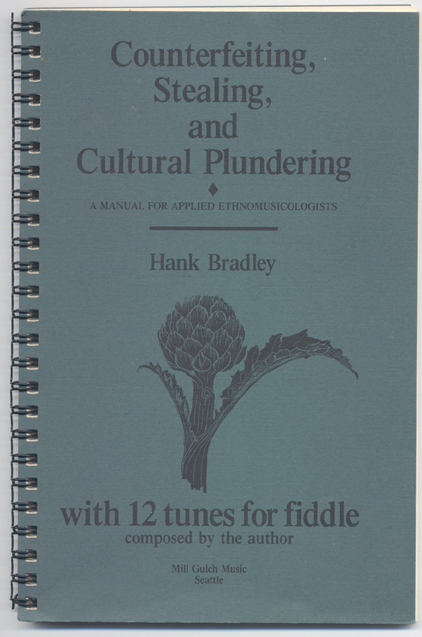
I won't go into the whole flaming screed, but I strongly suggest you pick up a copy of Hank Bradley's amazing essay "Counterfeiting, stealing, and cultural plundering
A manual for applied ethnomusicologists." He makes my argument, but without the bitter recriminations that I am famous for. Suffice it to say that when someone not of a culture approaches me about playing music of a culture, the only thing I could think of is "what is it about yourself and your own people that you find so distasteful that you feel the need to suck off some one else's'?" Over the years, I've been shown some amazing examples of historical dissonance that has tempered my tone quite a bit. But I think you get my point.

d) Play "with," not "like."

Music is fun. It's amazing and wonderful and healing and a conduit to the ineffable. But music is simply just one small facet of a greater diamond that represents a culture, and thus can also be precious and fragile. I don't begrudge anybody a gig; if you want to call yourself "gypsy-punk-klezmer-balkan-circus" whatever all you like. It's a free country. But I prefer to play Lautari music with actual Lautari musicians in situations where they expect Lautari music to be played. And the simple truth is: you could too. All you have to do, as LBJ famously remarked, "is everything you have to do." Life is WAY TOO SHORT to be screwing around, people. Get out there and do it, not just some lame half-assed version of it that a denatured and decontextualized society will let you get away with.

Playing a watered down, second rate version of a beautiful musical tradition far removed from its context and community with like minded hobbyists isn't going to get you anywhere. Not anywhere you'd really want to be ultimately, I hope.


(See Manifesto for a New Year, dated 2007 for even further context on music and intention.)


3/20/09

"Austin's King of Jewish Bluegrass Tuba"

I awoke this morning at the historic Anglican rectory just north of U. Cal Berkeley, to be shuttled to the Elmwood Elementary for a school program with Kosher Gospel singer Joshua Nelson. (Not to be confused with the lame Israeli rock singer of similar name.)

It was a wonderful bunch of kids asked probing and sensitive questions for the musicians.

Then it was a short cab ride into Southwest Berkeley to the workshop of master ukulele builder Mike DaSilva. Mike made a uke (the "Lucky Lady") for my buddy Pops Bayless and it’s quite possibly the finest constructed, sounding and playing string instrument I’ve ever encountered. And I have some mighty fine custom instruments myself. Mike took time out his busy day slicing tone woods to show me around the shop and talk ukes. I’d only ever communicated with him via email and phone and I was gratified to find such a kind and thoughtful gentleman.


Modest and quiet in person, he really does let his instruments do the talking. I’m a big fan of his historical instruments, which he had several in the pipeline and are as fine as you will encounter. But he also showed me an amazing semi-cutaway tenor he was building for James Hill, designed to accommodate his playing style. And we discussed at length his experiments with carbon fiber tops and I even put in a tentative order for a concert model (allowing funding!!)


While there, I got to see his latest line, a low cost, hand made entry-level uke. It’s an all solid Koa box in the Hawaiian style with PegHed tuners and one of his amazing new uke cases, all at $650.00!! An AMAZING value for a hand made instrument I assure you. It plays and sounds to my ear in no way appreciably different from and custom made instrument. Put in an order now.


Then it was a long stroll on an uncharacteristically warm summer day back to the rectory. On the way this caught my eye and I checked out one of the many Indian import shops on University Ave.


So here’s what’s way in the back: and that’s just a few pics. There was every imaginable bell, shaker and tambourine, and hand pump organs and stuff I couldn’t begin to identify.


After a running a short errand I was dropped off at the festival director’s house for a shabbes meal. I had arranged to meet my old pal Djordje and it seemed we were both early, so we sat down on the stoop and caught up. After a short while, a nice lady across the street called out to us a bade us come into her house. As it turned out, she was married to another musician pal of mine, John Schott and they got a call from the director telling her she was running late.


They served us tea and snacks and John’s wife (so sorry to forget her name) is a writer and had a story about he trip to Belgrade, Djordje’s hometown, back in ’89. John accompanied the story with a wonderful minstral style, 6-string banjo made by a local maker and one that I coveted immediately.


Soon enough, the director arrived along with Joshua and some of his singers and other local Yid’n, and after the barruchas we sat down to eat. Chulent, asparagus, and some of the finest BBQ Chicken I ever had. No pictures, too busy eating.

But after a cognac or two, the honored guest took to the keyboards for a few tunes.


Then off to bed. They pick us up to play on KPFA at 8am and then we go to KALW for a live broadcast on West Coast Live. Then it's the big concert tonight! It's important to note that now that it has been in print twice, I am formally "Austin's King of Jewish Bluegrass Tuba."

Sunday morning I magically turn into a Bad Liver and do shows out here Sunday and Monday. Hard to believe sometimes this is my profession.

6/15/08

Golem DVD Reissued


I'm happy to announce the re-issue of one of my favorite projects that frankly didn't get much notice when it originally came out. The Klezmer Shack gave it high mentions as did the Austin Chronicle when it was first released (see review below.)

You can order or even download yourself a copy at my Film Baby site. Please do as I'm mighty proud of the results (and have yet to pay for the expenses incurred making it!)

Austin Chronicle Review
BY DARCIE STEVENS

"The Golem would be potter's refuse without its soundtrack. Set in 16th-century Prague, this 1920 silent film was written by, directed by, and starring Paul Wegener, but the German Expressionist classic, here on DVD with English dialogue cards, is brought to life like its titular clay monster by local music-scene veteran Mark Rubin and his klezmer posse. Scoring silent cinema live for an audience at Austin's Alamo Drafthouse is no small feat considering the breadth of instruments interspersed throughout. Somehow, Rubinchik's Yiddish Ensemble pulls it off. Their traditional songs are married to the picture as though it were never actually silent. In fact, the presence of five 21st-century men – Rubin, Ben Saffer, Dr. Don Weeda, Michael Maddux, and cantor Neil Blumofe – isn't even felt until the audience begins to clap along to a particularly joyous refrain, which happens several times. There's something about that tuba-accordion play that inspires energy. Rubin & Co. drive The Golem through scene after scene, displaying what a triumph this film was in its time. If that's not enough Yiddish, Rubin is also one-third of trad trio Hank Sapoznik & the Youngers of Zion, whose debut LP, Protocols, is a soundtrack for any Jewish celebration. Culture is so trampled these days, it's a blessing someone like Mark Rubin is keeping traditions alive."

3/18/08

Report from Klezmer Festival Fürth

Last month I had the great pleasure of joining the teaching staff of the bi-annual Klezmer Festival Fürth in Germany. It's a lot like the other Klez Kamp knockoffs that have sprung up around the world, but this one is only a weekend long and hyper intensive. Josh Hororwitz leads the staff and I was tapped by Alex Kontorovich to perform with a German Goldenshteyn tribute ensemble.

It was a LONG flight from Austin to Atlanta, then Paris, finally to Nurenburg and then a short drive (with a wonderfully pleasant driver) to the old town of Fürth. Lucky for me, the event was run with typically European efficiency; a mixture of respect, conviviality and payment in a currency that isn't tanking a little bit more every day. I was also pleased to find a bar with a fine selection of Cuban cigars, which I relished smoking at every free moment. Yup, they really are that much better than the Dominicans we poor Yankees get now.

High lights for me included playing and hanging out with the Hungarian members of Budowitz, who by the way sounded simply amazing at their Thursday night concert. Along with the estimable talents my old pal Cookie on fiddle and Christian Dawid on reeds, Josh's early music approach to Jewish music was made all the more relevant and vibrant by this "Mutt & Jeff" trio of Tanzhaus musicians. Besides being some of the finest players I've been around, and I'm referring to the rest of Budowitz for instance, these cats bring a joi de vrie to their playing, on stage and off, that is simply inspiring. I sat in on their workshop when I wasn't teaching and as per usual learned more myself than the students, maybe. (Their names are Tamás Gombai, Sándor D.Tóth and Zsolt Kürtösi in case you were wondering No, I can't pronounce them either.)

For the first day I was teaching ensemble performance along side Aaron Alexander and Dan Blacksburg who as usual did most of the heavy lifting. They had to split the next day, so it was left me to to rehearse the student ensemble. These students I found to be at turns eager to learn and techincally quite advanced not only on their instruments, but in style and repertoire. Jewish music has really made deep inroads in Germany, with repercussions I can hardly imagine.

Well, after a day of teaching from 8am-5pm, it was back to the hotel, and quick bite at the venue's own restaurant and then straight to a performance. The German Goldenshteyn ensemble featured all but 2 folks who played on his CD, and in their absence the addition of all the members of Budowitz. It was a mighty big band, but with almost no rehearsal (adhering to the Frank London school of "it's all in the casting" style of band leadership) young Kontorovich did an admirable job of intoning German's material. Hard to do when the tuba player was weeping uncontrollably between sets.

OK, so the next day it's more 8-5 teaching offset by a lovely lunch with a new best friend, Vira Lozinsky . She was born in Moldavia and raised in Israel, she came as vocal instructor. She's a "keeper" as we say back home, a fine combination of wit, skill and talent. This is deep praise, as many of you know how much I don't normally care for singers. But I hear she cut a record with Toronto's Beyond the Pale, and I'll be looking for it.

So then there was the student concert. I'll let the local press take it from here:

Ok, so it's in German and small, so here's a translation from Josh:

"The eleven teachers gave their all to take the 55 students under their wing. The spontaneously formed combos sounded as if they had already been playing for ages with each other. Perhaps the secret was to choose pieces that lay well, often ones in slower tempo, but in the completely full hall of the Klangforum (Culture Hall,) one didn’t notice that. Mark Rubin, one of the few musicians who waves the klezmer flag high in Texas, distinguished himself virtuosically amidst his students...."

The smiling clarinet player from the newspaper photo, Katrin, is who sent me the clipping. After the show, she told me she felt terrible and that she and her fellow students didn't do a good job. I assured her that nothing could be further from the truth, and I promised her I wasn't lying. I very glad to see the local reporter backed me up on that point.

With any luck I'll see some of these same folks at the Klezmer Week in in Weimar, where I'll be on staff as part of the Other Europeans' project.

12/27/07

Cookie and Josh

Klez Kamp Staffers Cookie Segestien and Joshua Horowitz relax and play a tune between classes:


10/18/07

Just Another Day on Eldridge Street


So I was interviewed for the Forward.com about a strange event that took place in NYC recently. I was not invited to it, nor did I think it was a very good idea in the first place. But for some reason I "said publicly want many others would only say privately.." Just my luck, huh? I do appear musically on the podcast as a member of the Klezmer Brass All Stars.

For the record I said quite a bit more in fact, but interviewer John Kalish used only my most charitable statement about the event's dubiously talented organizer. However, the less said about such ill conceived and poorly rendered wastes of time and resources (like a $150K Rockafeller Grant for instance) the better.

No?

10/17/07

Simchas Torah in Waco

Yes Virginia, there are indeed Jews in Waco Texas.

Have been for a mighty long time in fact. Nicest people you'll ever meet as it turns out. I got a call from Mike Levine, the shammes of Temple Rodef Shalom, asking if I could come help celebrate Simchas Torah with his congregation and their relatively new Rabbi. Rebbe Rovi Motem holds the distinction of being the first Reform rabbi ordained in Israel, and he's doing his level best to expose his congregation to every aspect of Jewish religious expression. There was in fact a time you wouldn't have thought twice about hiring a band for any of the important holidays. Now, it's as rare a hens teeth (or a kosher BBQ in Williamson County.)


Here the torahs come down off the bimah. Note the amazing "A frame" design. It was a amazing building in fact.


Mark Rubin and his Jews of the Golden West. Olliver Steck, accordion, Mike Stinnet, clarinet and Steve Schwelling on poik (the traditional drum.) We played as the congregation carried the torahs around us, stopping seven times for particular blessings.

After a motzi and a brucha, a bissl nosh, fun di Tabl music provided.

Well here's a surprise!! This is my sainted Godmother, who travelled all the way from Stillwater OK to see the show, (and her great grand kids too...)

Work like this is very rewarding for me, to perform Jewish music within the context that it was originally intended. We'll come do it for your congregation too. Just drop me a line and we'll work out the details.