Showing posts with label gypsy music. Show all posts

8/10/11

Great Romanian Accordionist playing "Live"

Here's a little introduction to Lăutari accordionists.We'll start with probably the most famous and influential,Fărâmiţă Lambru. He had a great singing career as well, but it was accordion that first made him famous. "Melodii lautaresti"
And this short Sirba:

And here's a cameo in a Romanian film:

Here he's probably just playing along to a track, but no matter, its "live" of a sort:


I'm sorry to make you suffer a whole minute of Zamfir on the pan pipes (which he rocks BTW) so that you can see the great Vasile Pandelescu at work :

Really and truly I've been checking out Viorel Fundament a lot lately, so dig :

Here's a more modern approach to the music from two of the hottest Young Bloods on the scene,
Ionică Minuneand Marian Mexicanu :

Here's Emil Kroitor, ex-Moldova now living in Tel Aviv. He has been described to me by every Moldovar lautari I've encountered as the greatest of them all. He collected and in some cases composed the vast majority of tunes that are played by lautari today.


Just found this cat, and he can really throw down in the rustic school. Mighty!:

This still remains one of my favorite performances, entirely give it's circumstances! :


11/2/10

The Other Europeans on YouTube

Here's a collection of videos of the "Other Europeans" project which took up a big chunk of my last 3 summers. Watching these videos, I can hardly believe I was actually there when this all happened.


I'll start with this snippet of the documentary film that has been following the project over several continents.

(Additionally, I guess I should mention that they are still shy of funds to complete and release. Contact me offline if you'd like information on how you could help.)


Here's the band in Furth Germany, March 2010.

Same show, different angle:

Here's a smaller version of the band at KlezKanada, August 2010.

This is a shockingly great performance from Marin Bunea and Petar Ralchev. It was my birthday that night and after his solo, Petar leaned back to me and said "For you, happy birthday!" Happy indeed!!

Here's the cats jamming backstage (with guest Sergui Popa.) They just can't stop playing.

There is talk of this band coming back to the States next year and if it does happen, you all here will be the first to know!

3/7/10

The Miracle of Mardi Gras...

...and of modern technology.

I'm very lucky to be a member of the Carnival Season brass agregation, the Panorama Brass Band. Essentially a enlarged version of the amazing Panorama Jazz Band with some wacko out-of-town ringers (like me.) This year's parade season was the best yet, in my opinion and this particular version of the band has a really wonderful and sweet vibe all week long. I produced a CD for the Jazz Band just a few months prior to Katrina hitting, and you should try and find yourself a copy.

What's also amazing is the fact that cell phone technology has advanced to the point where nearly every moment of parade is available for viewing on YouTube. So, I have compiled here quite a few little snippets of the parades, up to and including rolling with the St. Anthony Ramblers on Mardi Gras day.


I must say one of the most moving and tender moments I've had all year was performing a chorale in honor of one of the Rambler's who passed over to glory in the last year, while we were introduced to brand new Rambler's who just recently came into this world. All on a Mardi Gras Day, in the Marginy in New Orleans. (Makes a big boy like me pretty weepy. And yes the sound is awful, but I hope you get the spirit that was created in the moment.)

We actually took a couple days off between rolls and recorded a CD, which I hope will be all wrapped up and out soon. The 2010 version of the Panorama Brass Band was:

Patty Farrel, alto horn

Don Godwin & Mark Rubin, tenor horns

Charlie Halloran, slide trombone

Ben Schenck, clarinet

Aurora Nealan, alto sax

JR Hankins, truba

Jack Pritchett

, trumpet

Dan Oestreicher, bari sax

John Gross, sousaphone

Boyana Travanova, spinning drum

Greg Mervine, bass drum

Sean Clark & Ritchie Barshay, percussion

Bon Mardi Gras, y'all. See you next year, for sho!!

12/7/09

Now available: a handy Mark Rubin FAQ's

In all the years of my public life as a performer, a radio and television host, music supervisor for motion pictures and television or even as a journalist for print and web, not once had anyone asked me to share my basic philosophies about music and culture. Sure, I get a good jab in once and a while, like my quotes in Barry Mazor's "Meeting Jimmie Rodgers" or in the odd print article like Josh Alan's profile of me for the Dallas Observer. But ultimately, there's some kind of editor or agenda at play that somehow muddles the point I hoped to make. (Most notably the "Rubin v. Jimmy Sturr" non-controversy of several years ago.)

What a gift it is then to be allowed a platform, outside of this little blog here, to let folks in on some of the concepts that I have been working with, struggling with and trying to make sense of for the entirety of my professional life. They are the ideas that have defined me and, by extension, all the things I create.

Writer Sarah Hagerman of the Steam Powered Preservation Society web site sat down with me last month, asked some really great questions and let the cassette recorder roll. (Yes, a glorious Radio Shack cassette machine!) In essence, she has provided me with a handy FAQ for me and I am very grateful for the opportunity.

If you are even mildly curious about what motivates my work, then read this two part interview and know quite a bit about me. Probably more than you'd like, I reckon.

Part One: A wide ranging talk including growing up Jewish in small town Oklahoma, the real purpose of music in culture and how the legacy of the Bad Livers was so misunderstood.

Part Two: The power of nomenclature, language and how it effects music and culture, why Bluegrass Nashville is a closed shop (for Jews at least,) my travels across Europe with Rroma musicians and the story of Fat Man & Little Boy.

11/3/09

Identity: the Other Europeans. Jews, Gypsies and beyond...

For the last 2 years I was fortunate enough to be involved in the “Other Europeans,” project based in Weimar Germany with side trips to Vienna and Krakow. You can visit the website set up for the project and it’s attendant seminars and there’s even a site dedicated to the band The Other Europeans itself. Follow the links for back round.

But all you really need to know is that pianist/composer Alan Bern has assembled an amazing collection of some of
(can’t be all of, as I was involved so that sends the curve down a bit) the planet’s greatest “Yiddish” and “Lautari” musicians. Those were the terms that we came up with to describe the musical traditions of the east European Jewish and Rroma communities for our working purposes. Truthfully, the monikers “klezmer” and “gypsy” are a mixture of inaccurate, mal-abused and frankly racist so it was important to name ourselves and control the conversation.

The first year was all about defining within our two separate groups just what was it that made our music either “Yiddish” or “Lautari,” and that was easier said than done. Jewish music had been recorded commercially in Europe since the earliest days of recording technology. But then there’s that “difficult period” as they call it in Germany between 1933-1945, where we lost direct connection to the context in which all this music functioned. Whatever tattered bits that remained was stitched together after wards, Dead Sea Scroll-like had further had to contend with the twin towers of devastation: assimilation into the American fold and the active replication of Hebrew and Israeli culture. Yiddish life fared much worse in that air than anyone could possibly imagine ("That language grates in my ears," Ben Gurion on his mother tongue.) Our Rroma buddies, as devastated as they were too in the fascist roundups, had the meager benefit of a continued context (like, it’s just as bad today for Romani people in Europe as it ever was, for instance,) but were ignored by the recording industry entirely.
Thus we have a decent window on what Jews sounded like a long time ago and we know what Rromanis sound like today, so finding the “core” sounds and repertoire was mighty difficult to say the least. At first we did our separate workshops and put together 2 very fine representative ensembles of each tradition that performed to much acclaim at the KlezMore Festival, the Festival of Jewish Culture and along with 2 concerts 2 weeks of intensive workshops and panels at Yiddish Summer Weimar.
I came home with quite a few of my basic conceits about Jewish music challenged, in a good way I think. I also arrived with a whole new approach to not just Jewish music but music and further, life itself not to be too awful melodramatic about it. There’s just something so positive and edifying to be sitting in a room with some of the no-shit best musicians working on the planet. Being in the musical sphere around Petar Ralchev or Kalman Balogh alone should be life changing if you are paying attention. But then to meet the Moldavian contingent, and to be able to lock in so well both onstage and off WITHOUT ANY COMMON LANGUAGE OTHER THAN PICKIN’? The mind boggles actually.
It pains me greatly, embarrasses me really, that I was unable to find a sponsor to fund my participation in the field work trip to Edinets Moldova, the home of many of the finest Lautaris and one time home of Jewish Clarinet Giant Dave Tarras. Why Edinet, you ask? Well, submitted for your consideration are the two following recordings with roots there. The first, a very well known tune called “Hangu lui Nicu Chitac” by the Edinets based Lautari band Ciocarlia. The second, Dave Tarras recorded in the about the same time (late 1950’s) with the Abe Ellstein Orchestra called “Lo Mir Freilachsein.” Hmmm. What do you think? A connection maybe? (oh, can't post the mp3's. email me offline and I'll send them to you.)
For reasons I still cannot properly reconcile, my own Jewish community here in Austin feels not even the slightest connection to this endeavor. And in fact my attempt to raise interest, and hopefully funding, has been met either complete indifference or even open hostility. “How can we talk even about Eastern Europe right now when there’s so much anti-Israel bias going around…” was a direct quote from one of the folks I solicited for funds. This prevailing attitude in American Jewry belies a further discussion, and we’ll get around to eventually I’m sure. But suffice it to say when even the local Yid’n are not one bit on board with your version of Jewish Life and Culture, then you have a very tough road to hoe indeed.

On a more positive track, this years Other European project, ironically funded by the EU no less, included a Winter rehearsal in Weimar where the two ensembles attempted to meld into some kind of cohesive orchestra and explain musically our research. The sessions, in the middle of a frozen German February, were grueling and difficult. But the end result, highlighted by an amazing concert, was more than I had hoped for.


We gathered again in Vienna in July to further rehearse and then share our research if you will with concerts at the same three festivals we played last year. If it was even possible, these concerts were way beyond what I think any of us could have anticipated, and the performance in the Reform Synagogue in Kazimerz (Krakow, Poland) was one for the books; possibly a personal best thus far. Luckily for all of us, the concert was broadcast on television and is archived in streaming format here.
What are we to gather from all this?
I’m still processing it I must admit. Searching clumsily for analogies at a seminar, I proffered that the Yiddish and Lautari music’s were at one time drinking from a very similar well, with our communities close in both cultural and physical proximity. Marin Bunea reminds us that these music’s exist devoid of a required nationality or religion. In Edinets, he relates, the finest regarded Lautari was in fact a Jew and vice versa. But much in the same way that Bluegrass* music took off as a hyper-charged, polished and citified version of it’s more unsophisticated Old Time Country roots, Lautari music exists today in the same sort of context: concertized, virtuosic and harmonically advanced. Poor little Yiddish music remains stunted, attached more to the simcha and dance traditions and much like Old Time played today, devoid of it’s life giving context played by musical recidivists as if it’s a Jewish "Civil War re-creationist music." Or worse still, used only as a name checked home base of style and repertoire, used to create some kind of clumsy admixture using Yiddish melodies as a Tabula Rasa for whatever the artist (usually someone unable to enter the music business any other way strangely enough) wishes to project. Insert one of literally HUNDRED’s of acts in either slot. It’s OK. We have plenty of time…
That all said, I think that now is as fine a time to note that I’m pretty much done with attempting to make people agree with my take on Jewish music anymore. It's tiring and evidently ineffective. I’ll take a gig when they come, but my personal identification as a “klezmer” (oh how I do despise that term!) musician has thus concluded. I walked away from a popular and commercially successful music group almost a decade ago, in no small part to better devote myself to the reconstitution of Yiddish and other traditional music’s. But as anyone who has been working in this field could tell you, it’s not a parnossa. I reckon I made more scratch playing my own music for 90 minutes last week than Michael Winograd banked all last year. And he’s friggin’ great. And he’s only one of about three dozen amazing cats I know who have done the hard work and play the good music, with wit and skill. But what they didn’t learn, as they were way too busy learning music and culture correctly, was how to hustle a a good paying gig and write a grant that appeals to the current version of mainstream Jewish thought.
But that’s the environment we find ourselves in today, and I feel that I’m personally unable to in my opinion degrade this music, any music actually, to the level that is currently required to operate effectively. Frankly, I feel the same way about Bluegrass, the music of my upbringing as well; I just can’t reconcile what it has become today with what I know to be my own experience.
Ultimately, I think we get the culture that we deserve. I have no children, so ultimately I have no dog in this hunt. And I plan on having a much more care free life now that the "why don't you to think like I do" portion of my career has now thankfully concluded.

*I wish to go on record that Zev Feldman called my analogy “brilliant,” but only after he amended it.

9/8/09

What I really should have said...

Seems a lot of folks have been approaching me lately about Eastern European music here in Austin. I can see why too, as I've been playing Jewish Dance music (aka "klezmer') here and abroad since I first moved here in 1989. I don't wish to sound entirely discouraging about it, but a person's intentions completely speak to the end product. And my life in folk music has been shaped by the people who I learned from. Who were, trust me, far less amiable in expressing these concepts that I.

As I return tonight from a weekend of work in NYC with Jewish clarinetist-Bluegrass mandolinist non pareil Andy Statman, the ad hoc Balkan Brass Band Veveritse and others, I'm starting to formulate a handy FAQ on why maybe I'm not the guy you want to talk to.


a) Music is functionary to context.

As much as I enjoy listening to and being inspired by, lets use simply as one example, Romanian Lautari music, the simple fact is that there isn't anyone here in Austin TX who wants to hear it. If there is no wedding, no christening or restaurant gig, then why take the time and energy to crank out a low grade version to play in front of audiences that wouldn't be able to discern the difference between no good and no, good! Submitted for evidence: What I've found in my many years in this community is that the Jews of Texas, a mighty fully assimilated bunch of folks, don't much care for the kind of Jewish music I play. It's attached to Yiddish speaking culture that they either can't remember or in the case of fervent Zionists, reject entirely. Thus, I don't get any calls to play simchas here, even though after over a decade of study the musicians I work with locally are as competent and fine as you'll encounter anywhere. There's just no demand for the service I provide here. I do get work every where else there is a culturally active Jewish community, say like the East Coast (who would have thunk?) and without much irony, parts of Europe where it never existed in the first place.

Many years ago, I became entranced with the Oud and the sounds of the Magreb and points East. I sought out a teacher, which is what you are supposed to do when you wish to really learn something. But he wouldn't show me a thing on the instrument, not how to tune it, nothing, until I explained myself. Why, he inquired, do you want to play the Oud? It is not your music. There is no possible way you will ever understand the music it makes, he explained, as it takes the study of a lifetime to comprehend not only the tonalities but the purpose and context in which the instrument exists. It was not until I had outlined my goals completely, and to his satisfaction, that he started my instruction. (For the record, I told him I was interested in the Oud only where it intersected with Western cultures, in the form of the Greek Oriental Rembetika tradition which has historically informed the Hassidic and other Eastern European Jewish music's of which I had made a decade long study at that point.) I have a feeling most of these young kids playing folk music today have never been challenged in that way. And more's the pity.


b) "Coals to Newcastle"

Here in Texas we have AMAZING living music traditions, with Tejano, Tex-Polish, Tex-Czech and French language music’s all indigenous to the region. Shuffle blues, honky tonk, Texas swing, white folks got some great music here too.


Who, really, moves to Austin TX to play Balkan music? Someone who wants to be as far away from the Balkans, and anyone who could call out a charlatan as possible, that's who. What possible explanation can you conclude?

There's a whole tribe of "New Orleans" jazz musicians who reside and work here in Austin simply because they possess neither the skills or stomach to actually go to New Orleans where, strangely enough, there is a built in demand for New Orleans Jazz. It's far more comfortable to sit 8 hours to the west and not ever have to see if you really could “make it” in the proper context. Bluegrass lives in Tennessee. Be-Bop and Free Jazz in Chicago and New York. Balkan music lives in the Balkans and when you drink this far from the well, the water is mighty foul indeed.

Conversely, Texas music has changed the world, and people leave their homes and lives elsewhere every day to come here and take it in. Personally, it's idiotic not to soak it all up, as it flows from the tap here. If, that is, you have the ears to hear it.

c) A "cultural dilettante" is the worst pejorative in my personal vocabulary.

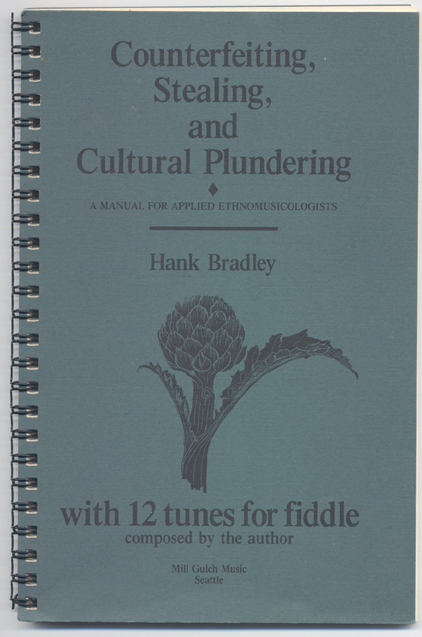
I won't go into the whole flaming screed, but I strongly suggest you pick up a copy of Hank Bradley's amazing essay "Counterfeiting, stealing, and cultural plundering
A manual for applied ethnomusicologists." He makes my argument, but without the bitter recriminations that I am famous for. Suffice it to say that when someone not of a culture approaches me about playing music of a culture, the only thing I could think of is "what is it about yourself and your own people that you find so distasteful that you feel the need to suck off some one else's'?" Over the years, I've been shown some amazing examples of historical dissonance that has tempered my tone quite a bit. But I think you get my point.

d) Play "with," not "like."

Music is fun. It's amazing and wonderful and healing and a conduit to the ineffable. But music is simply just one small facet of a greater diamond that represents a culture, and thus can also be precious and fragile. I don't begrudge anybody a gig; if you want to call yourself "gypsy-punk-klezmer-balkan-circus" whatever all you like. It's a free country. But I prefer to play Lautari music with actual Lautari musicians in situations where they expect Lautari music to be played. And the simple truth is: you could too. All you have to do, as LBJ famously remarked, "is everything you have to do." Life is WAY TOO SHORT to be screwing around, people. Get out there and do it, not just some lame half-assed version of it that a denatured and decontextualized society will let you get away with.

Playing a watered down, second rate version of a beautiful musical tradition far removed from its context and community with like minded hobbyists isn't going to get you anywhere. Not anywhere you'd really want to be ultimately, I hope.


(See Manifesto for a New Year, dated 2007 for even further context on music and intention.)


6/16/09

There's Way Too Much On YouTube...

..that you may have missed. I find it, and share it with you so you can have a productive life.

Here's a collection of music in it's most natural state, in context and live. Hope you enjoy.

From a Serbian bar, here's Aca Nikolic Cergar:


Serbia again, looks like a backstage rehearsal at the Guca Festival with Demiran Cerimovc Orkestar, that year's winner:

Another Guca favorite, Vranjski Biserli playing a very upbeat Edersedzli on a morning talk show

Here's an inpromyu street jam with some out of towners in Vranska Banja, home to many fine brass band players in Serbia. Come with me now to old Mexico, the State of Sinaola in fact, home of the big brass Bandas. Sit in on this rehearsal of Banda Libertad de Guamichil (and dig the tuba player who kills it!)

Follow me down to the beach with the Buccaneer Band of Mazatlan.

Here's a Son Jarocho band tackling one of my all time favorite numbers, El Cascabel! In my heaven, harps sound like this:

Well, I think this is what happens when two ditsy French chicks pick up a couple of Romanian Lautari and head back to the hotel. I think...

Here's what looks to ba a social gathering of some sort in Romania, street music provided by the Fanfara din Toflea.

Further East, at least I think, here's the scene at a Moldavian Wedding. Screw the band, let's see those dancers. Sirba!!

Ah, the mariachis of Romania. A little table music?

Here's as fine an example of a Romanian a village taraf as you will find. This could have been filmed 100 years ago.Cristi Geagu Catâroiu on lead violin.

Welcome to the living room of the Pavlovic Family, where daddy Branko plays the hell out of the brac!!

We all owe a great debt to these folks wwho are giving these little glimpses into their world. Hopefully with technology like this, we can put aside the lie of otherness between peoples and we can finally recognize everyone as brothers in the family of man. That's my dancing prayer.

1/3/09

On Stage with the Lautari Ensemble

A trumpet feature from the student concert at the conclusion of this years Yiddish Summer Weimar. This is the "Lautari" ensemble half of the project with quite possibly the finest living Rroma musicians today (and one very lucky gadjo on bass.)

Adam Stinga leads the suite of tunes on trumpet with Marin Bunea (violin,) Peter Ralchev (accordion,) Kalman Balogh (cimbolm,) a loutish dullard (bass,) and Adrian Receanu (clarinet.)


I'll be headed back there at the end of January for more rehearsals and a little concert.

7/21/08

Notes From a "Jewish" Europe

You may have noticed that I have been mighty quiet on this blog thing here.

It’s not like there hasn’t been a lot to tell you about. For instance a vicious car wreck nearly a month ago that I have been advised by counsel not to discuss. Then there’s the upcoming Bad Livers show, the first in nearly 8 years, which surprises me as much as the next guy. Then there’s a one-off date in Aspen CO with Andy Statman coming up the day before which I’m really looking forward to. Next month finds me involved in major events in London and Toronto, so the ball is getting moved down the field as we say back home.

But the real reason I haven’t written anything is simply because I have not had the time. For the first time in a very great while, I am actually being utilized to my capacity with nary a free moment to reflect. And boy, does it feel good.

Many months ago, Alan Bern, who among a great many other things is the artistic director of Klezmer Summer Weimar (that’s Germany, not the town of the same name just down the road from Columbus TX, BTW) asked me to participate in a two year project funded by the European Union and several European Jewish music festivals (Festival of Jewish Culture Krakow and Klezmore Vienna along with Weimar) dedicated to the sticky topic of the similarities and differences between the “klezmer” and “lautari” communities of musicians that once lived, worked and very often partied together for many generations prior to WW2. To be clear we’re talking about Jews and Rroma (ne “gypsies’,) both hot topics with confusing histories in Europe, both east and West. I came into the project with my own cloudy conceptions of just what it is that makes Jewish music “Jewish,” and as it turns out, the same questions get asked among the Rroma as well.

The conceit is to form two groups, one Jewish (“klezmer” well call it,) and the other Rroma (“lautari” for our purposes here.) Each group is made up of musicians from wildly divergent back rounds and locations sharing only their professional proficiency in the culture they work in. Thus, the “Jewish” band features a Sephardic Jew from London, a couple goys, one named Christian, a Jewish confirmed atheist, an apikoros-in-training Texan, and a Lubbovich Chasid from Ukraine. The Rroms have Hungarians, Moldavians, the greatest living accordionist from Bulgaria and a gadjo Romanian living in France to contend with. The klezmers were given a mammoth amount of recordings and transcriptions, mostly of the earliest recordings of Abe Schwartz, Harry Kandel and the Bobriker Kapelye, attempting to divine just what is it in these recordings that a) makes these performances Jewish and b) why has nobody in the entire span of the “klezmer revival” been able to come close to that sound. As anybody who has followed my writings on this topic will tell you, I have some pretty clear ideas on the subject (see “There is no Klezmer Music” for instance.) But I guess simply because of that stance and my willingness to dive into these questions with an open mind (and get to hang out with some of the finest living Lautari to boot,) I was the right guy for the job.

(For the record, the "Jews" were Alan Bern (project leader,) Stas Royko, Paul Brody, Matt Dariau, Christian Dawid, Dan Blacksberg, Guy Schalom and yours truly. The Rroma were Kalman Balogh, Czaba Novak, Peter Ralchev, Marian Bunea, Adam Stinga and Adrian Receanu.)

Here's video snippets from the first day's rehearsal of each group:


We gathered in Krakow for 4 days of intensive separate rehearsals, culminating with a performance at the Festival and a joint appearance at the big Shalom on Szeroka party that concludes the event. From there, we traveled by bus to Vienna to do the same there, only with one day to rehearse. Then it was off to Weimar for two weeks of symposium, performances and workshops (the later of which we are right in the middle of.) These weeks of close quarters and twelve-hour bus trips have done much to bring the two groups into a single outfit joined with a common purpose. Language has been a bit of a stumbling block, with French, Russian and Hungarian translations running nearly constantly at all times.

And then for the week of intensive workshops we’re all teaching the Germans in English. (Can you imagine Germans coming to America and pulling that off the other way around?) For your edification Alan noted that there was only one continuous complaint during the four symposium days. He told me many people had a common complaint, “we’re certain Mark is an very interesting person. But what is he saying? No one can understand a word he says.” Evidently Texan English is an unknown dialect here in the Eastern part of Germany…. To that point, I am going to have to become bilingual, by hook or by crook, if I am going to continue these dialogs. I’m with Obama on this point: it’s a crying shame we Americans are so language deprived.

Did I mention we were followed the entire time by a film crew documenting the whole thing, all the time? That's a whole other blog posting....


Hanging out, drinking vodka in the street and sitting down for a few meals in Weimar with Bob Cohen remains the highlight of the trip for me. He’s one of the last real Human Beings; unafraid and fully empowered in beauty and light, 24/7. He's a bit like that crazy uncle who your father likes well enough to have come visit for a little bit, but is so honest and fearless that everyone seems just a little embarrassed by. (I'm talk about you Fred...) We even got about 20 minutes of old-time picking in. One day I predict Hungary will put up a statue of him, but only after he is safely long dead and not available to call them on their bullshit fakelore. He headed back to Budapest all too soon, but returns with his mighty ensemble, Di naye Kapele, to be the house band for the Dance Week, sadly after I split for the states. (Why is dance separated from music workshops? There’s a long debate in the making…)

The symposium itself was mighty damn interesting, even if the palaver was a mite high falutin’. I met and hung out a bit with Bulgarian Rroma rights activist Ivan Ivanov who is a complete hoot. But my favorite parts came from the juxtaposition of Yale Strom and his work, followed that by Bob Cohen and his. One fine example; Bob screaming out “BULLSHIT” at the top of his lungs at several moments during the screening of Yale’s movie. And folks, that was just the tip of that iceberg. There is so much to say about Mr. Strom and his version of anthropology, but I just can’t bring myself to even take the time to type it out. He’s about the nicest fellow you ever met. And mores the pity. Buy me a beer when you see me I guess and I'll spill all the beans.

By incredibly great contrast, the next night I saw possibly the finest documentary I have seen yet, and even got to meet the director. It’s called “Who’se is this song?” by Adela Peeva, and it’s a humble little film asking simple question and getting a series of complex answers. She’s a Bulgarian married to a Serb with a son living in Romania, so she considers herself Pan-Balkan. She was at a dinner party at Greek restaurant one night when the little folk band struck up a familiar tune form her childhood, (“Uskurara” in fact.) Everyone at the table, all from different nations, claimed the tune to be strictly theirs. Curious about a simple song and peoples attachment to identity and culture, she then travels all through the Balkans playing the tune for people and listening to their reactions. Not to be missed is the scene where this very gutsy lady plays a Bosnian version for a room full of drunken Serbs. It’s an amazing document that I heartily suggest you find (it is on DVD I’m told.) She will be screening the film in my old hometown of Norman Oklahoma in the fall, so you Okies don’t miss it.

It’s been completely gratifying work on all levels, musically, socially and spiritually if I don’t mind saying so. I have come to know nearly all the members of both ensembles quite well, and Mr. Bern is to be commended for pulling together what appear to be the nicest guys I’ve ever met in all my years in the music business, no foolin’.

This is some mighty deep work we are into, but it’s not all seriousness. In fact, this has been a tour of non-stop joke telling. We have come to find that it is yet another character Jews and Rroma musicians share. Nearly everyday, in every situation, someone in this project has told a joke, most of them terrible. The Black Belt Champeen Joke Teller belt goes to violinist Stas Royko, who translates all his jokes from Russian moments before he tells them and really deserves his own website. He has told so many tall tales and funny stories that I literally cannot keep track of them.

First up, Bob Cohen:
3 people are sitting in the dreary rain at a bus stop in Berlin; a Polish laborer, a former school teacher from Dresden (in the former DDR,) and a native born West Berliner. One of them notices what looks like a little bottle sticking up from the ground, and all three reach down to dig it up. When they pop the cork on the ancient glass, a Genie magically appears and announces: ‘for releasing me from my bondage, I will grant you each a wish. What is your command?”

The Pole thinks to himself, life is not what I expected here in Germany. I was much happier back home, so he says “I wish to go home!” POOF, he finds himself in downtown Gdansk, happy as a clam.

The East German thinks ‘this reunification has been a crappy deal for me. Under the Commies, I was a professor; I had a great apartment, and assured wage and security. In this new Europe, I have to hustle for a living and toil as a bricklayer. It’s just awful. He says, “I want the wall back up, I want my old life in the DDR.” POOF, the wall is back up and he finds himself in front of a class of students.

The Berliner watches all this go by. He thinks, “Let me get this straight. The Pole is back in Poland. And the Wall is back up.”

He tells the Genie, “I think I’ll have a cappuccino….”

Now, here’s one from Kalman Balogh:
When a man starts to age, he begins to loose a bit of his virility. For him, he becomes very sad the first time there isn’t a second time.

For his wife however, she becomes even sadder the second time there isn’t a first time….


7/19/08

Introducing Csaba Novak

In my opinion, Hungary's greatest dance band bassist, a regular collaborator with Cimbolm master Kalman Balogh. Csaba and I were to "team teach" the bass clinics at Klezmer Summer Weimar which have to date basically been Csaba doing the following while I stare blankly in awe...

Oh yeah, I forgot to mention. The bass? He made it. He builds basses in his "spare time." This particular model was as fine a soundsing and playing bass as I have yet encountered, and remember, I work at a bass shop. I'll be putting in an order soon.

8/2/07

Pohoda Festival, Trencin Slovakia

After a week of rehearsing, gigging, drinking and enjoying the hospitality of Frank and Louie London it's off to Trencin Slovakia to perform at the Pohoda Music Festival with Frank's Klezmer Brass All Stars and Boban Markovic's Okestar. There's a lot to tell about this trip, but I'm not certain I can share it all. (Earlier in the week Frank laid a copy of Absursbistan on me and I must give it a hearty recommendation.)

Today I'm flying Czech Airways which means I'm assured to fly in a plane that Delta Airlines deemed unfit to fly many, many years ago. The only possible positive is that they still hand out free booze on board and I ask for a Becherovka and a Pivo. Only too late I remember that I hate that crap and coupled with a probably gamey tuna salad sandwich I am reduced to clutching the handy air sickness bag within a few hours. The only other event to report was the little old Czech-American lady who was so unhappy to be sitting next to a tattooed fat guy that she literally cried until they found her someplace else to sit. Fine by me as now I get an open seat for the 9 hour flight. I arrive at the Bratislava airport just in time to get in line behind the folks who came off an Air Kuwait flight. It's all turbans and burkhas and fat Okie in the passport line, which takes nearly 40 minutes to be processed by the surliest looking border cops I've even seen. After finding my horn has in fact arrived safely, I spy a friendly gal and a taciturn gent holding a sign with my name on it as finally get through the Nothing to Declare line and into the very hot airport.

Europe is experiencing a genuine killer heatwave this week and it's well over 40 degrees Celsius, which it pretty damn unbearably hot. Now, I'm from a place where it gets real hot too, but we are a Freon based society in Texas and you are never far from an AC unit. Not so much here, in fact, Slovakia has no AC period. As a fold up in the back of the Mercedes S Class cab, I make mental note to find a table fan somewhere. Additionally, I had assumed that I was to be staying in Bratislava for the night and had made plans to hook up for a hang with my old buddy Samo Alexander of the Pressburger Klezmer Band. I awake from my cab ride to find myself in Trencin, some 2 hours and in many respects, an entire world away. There is no phone at the hotel, nor is there one anywhere near there. And Internet connection? Yeah right. I have no way to signal my whereabouts to anyone, nor do I know when and where I need to be. In other words, I am right back in Eastern Europe. For me, it's the only vacation I ever get.

For reasons only my travel agent will be able to explain, I am here 2 days ahead of the event and will be departing a day after it's over. The plane (and bus as it turns out) tickets were the most expensive I've seen to date, and bear in mind I am traveling from NYC and not Texas this time. A lot of things happened while I was there. I played and hung out with trombonist Noah Bless and drummer Richie Barshay for the first time, as they were on this date and not familiar with the Brotherhood of Brass show. I got to stroll around quite a bit with Merlin Shepherd whose entertaining company I have missed a great deal. And I had my mind completely blown by a series of events that I am, for now, choosing not to share here. Rather I will simply give a quick photo play of the positives. Like food, which was uniformly trayf and wonderful.

Like many E. European hotels, it has a cafe attached and this trip food was on the Festival, so lunch and dinner were had quite handily.

Here's the house Garlic Soup, which has a chicken broth base rather than the creamier version I am used to. Big honking croutons and goat cheese to top it off. Followed by,

Chicken cutlets, lightly pan fried, covered in cheese and served on a bed of cucumber and tomato salad. It was listed as an appetiser, so I sprung for the french fries on the side. It was quite enough by itself however.

What you learn quickly when you travel over here is that the staples of the local diet, meats and vegetables, are just so much better than what you find back home. Here they are don't mess around with fancy antibiotics for the cattle, genetically altered grains or heavy pesticides. It's mostly "organic" by default. And people, here the simple flavor of a diced tomato just blows up in your mouth, and I mean that in a good way.

On to lunch the next day,

Evidently the locals like to stuff chicken breasts with all manner of things and then fry them. At the all night bar and grill down the road I treated clarinetist Matt Dariau (dude, you owe me) to a few rounds of Pilsner Urquell and a breaded, pan fried, chicken breast stuffed with cheese and sausage served with the ubiquitous cucumbers and tomatoes. Today back at the hotel I opt for a similar dish, this time stuffed with cheese and a pear. Not appetising on paper maybe but quite delicious I assure you.

Merlin went for the "Pork Parts Platter" as we called it.


This is indeed a Swine based food culture.

Random photo play:
On of several Slovakian youth seen adjusting their "Nigger" costume in anticipation of a set from the Wu Tang Clan. Please note actual black face.

There is so much more I could share about this sight and many others. I have in fact written it all down, but I'm not sure that I'm comfortable airing those experiences in a public forum. You may contact me offline should you wish to inquire further. Let's just say I'm not adding Slovakia to my travel plans again anytime soon.

Note please a damn decent Kolache served in the backstage area. This is the first kolache I've been presented with in it's native land and I must say the mix of cream cheese, poppy seed and cherry (the 3 customary fillings) all together in one serving was mighty fine indeed. Take note you bakers in Caldwell Texas for next years Kolache Festival.

Here I am meeting Mustapha, Boban's new bass man. My mentor Sasa Alisanovic has disappeared as if into the ether, and in an almost Mafia like silence no one will dare share with me the details. (Word on the street is that he has since returned to play for a rival group so that he can tour with his son, but it's all hearsay at this point.) The new kid is like every Serbian Rroma tuba player I've encountered, stunningly talented and funkier that the funkiest bass player you ever heard. He's nimble and facile, but he lacks the power and authority that Sascha threw down. I'm sad, but I'll give Mustapha a break as he's stepping into a giant's shadow.


Here's Marko Markovic jamming out with Nelle backstage. Yes, Matt, that's your clarinet, no he didn't ask your permission and that's what you get when you leave things laying about backstage at a Boban gig. BTW: Marko can kick ass on clarinet which is astounding when you realize what an incredible trumpeter he is.

Some pre-gig jamming backstage with Noah getting his first taste of the Boban i Marko throwdown.

Here's Richie with the giant projection screen behind him. The big round thing is Mustapha's Helicon bell which will be in my right ear all night. Did I mention they had smoke machine for the gig?
Here's what Richie had to contend with the whole gig long. He's in there, I promise, I could hear him....

Here's some of the estimated 20,000 folks who saw the show.

So we get a day to walk around the Festival, where I do eventually find Samo and spend an evening surveying the immense old Soviet era air force base that the festival is held on. (Samo is sweet kid and leads a great band. He's getting married soon as well. I wish I wasn't so out of it, but I did enjoy his company very much.) There are literally thousands of people set up in a huge tent village and as anyone who's been to Banaroo or some such will tell you, these people have to shit someplace. I blow my last Slovak Crowns on a Klobasa and Fries, check out Konono No. 1's amazing set and find a driver to take me back to the hotel.

We are to be picked up at said hotel at 5am so we be driven across the border into the Czech Republic to catch a Czech Airways Bus from Brno to Prague. No problem really, except for the wedding party that is going on across the Vaha River from our hotel. It's a traditional Slovak affair complete with I'd reckon a 15 piece brass band. They are pumping polkas and waltzes, all sing a longs evidently, until 4:45 am I shit you not. Now, I personally would have gone over and joined in the festivities, but the only bridge to cross the river was nearly 2 miles away and they would have wrapped up before I even got there, I imagined. So, I stay up and meet the driver.

Along with Noah and Richie, we pile into the Mercedes and peel out into the Slovak countryside which is in a word breathtaking. A short stop at the border and we're off to Brno at what looks to be just in time to comfortably make the bus. Our driver pulls into the Brno Civic bus station at precisely 7:15 am, helps us take our stuff out and bid farewell as he must do this all over again for someone else.

Something tells me that we're not at the right place, so I rush over to the ticket counter. Nobody speaks English, but when I wave my ticket at them they say "City Zetrum, Hotel Grand, that way" pointing north. Oh crap. We have but 15 minutes to find the City Center and the the Hotel Grand. I hassle a cabbie in my worst German and he says it's about 10 minutes walk, head north. If I had either Slovak Crown or Euro I would have employed him. But no, we sprint as fast as our luggage (I'm hauling a tuba remember) will allow. I tell Richie, the smallest and most fit of our party to haul ass ahead. Through combined effort we suss out both the City Center and then the Hotel Grand, across from which we see a whole other bus stop and one with a gleaming new Czech Airways bus idling. We rush up to the open door just in time to hear the last call, stuff our gear into the overstuffed compartments, give our tickets to the stewardess (yes, on a bus, she served us drinks and a snack as well) and collapse into the last 3 open seats. The stops on the way out of town and drops off the stewardess and we're off to the Prague Airport. I fall asleep, for the first time on a moving vehicle in a long time.

I awake to find us at the Airport, but arriving right at the time we should be boarding. Another series of combined sprinting and hauling and we find ourselves at the ticket counter. Richie is cool and get's checked in. I have no hassle. But Noah's ticket isn't there. In the confusion of being late, the bus stewardess has taken Noah's Flight Coupon rather than his bus ticket! Most places this is a no-brainer, as all his info in in the computer and it's a non-problem. But here is Former Sovietistan, 13 years after the wall falls and they still can't move or even think without consulting a supervisor. This too wouldn't be an issue, except OUR PLANE IS BOARDING. Long, upsetting story short, he's issued a boarding pass and we're all on the plane. Again, for the first time in my life, I fall soundly asleep on the plane. This time passing on the crappy local booze and the tuna salad.

When I return to JFK I realize I had not made any arrangements to crash with anybody and I can't get anybody on the phone. As hot and tired as I was I make the decision to simply hit a hotel near the airport, loathe though I am to afford such. I negotiate a price with a Best Western, check in, set the AC to "stun," called out for a pizza and slept 18 hours. Recharged and refreshed, I set out to the Workman's Circle building to stash my horn at the Living Traditions basement office and seek out something to do before I headed off to Block and Hexter for the KlezKamp Roadshow.

I headed off to Brooklyn, a place I didn't know so well, even having played for it's celebration of late.I am grateful to the Sokolov-Gottesman's for putting me up in Brooklyn and for a pleasant dinner with Joey Weisenberg. And to Matt Moran who took me out for a drink and live music even after attending the memorial of his good friend. On Tuesday, I observed Tish B'Av by reading magazines at the Barnes and Noble and then seeing "Live Free or Die Harder" at the neighborhood cinema.

It's a good time as any to reflect that the things we may have around us pale in the comparison of the friends and relationships we form. Away from Texas and my relatively comfortable surroundings I note that it is only through my friends that I have been able to experience the things I have. Those experiences and those friends made along the way are more dear to me than any thing I could possibly posses.

May I also share with you this little secret. If I should, heaven forbid, pass from this Earth for any reason anytime soon, I want anybody reading this to know well that I have had a wonderful time and it's all OK. No, really, it's been a solid blast. I may be broke without a pot to piss in, but screw it, the saddest folks I know have plenty of money. My version of a mid-life crisis now is that I need new goals, as all of my goals up to now have been attained. And that, friends, are the words of a very, very lucky man.