2/28/15

Before there was YouTube and the interwebs, there was 3 Mustafas 3.

Many of you are too young to even understand what it was like way back then, but it was nearly impossible to find music from other places unless you yourself went there. Seriously. If you were into Reggae, you had to know someone who went to Jamaica, it really was like that. I had a Reaggae radio show on KGOU in Norman OK in 1982-3 and I literally relied on spring breakers bringing me back the latest dancehall 12". Hard to imagine these days.

That's what made the Mustafas such a big revelation, being Europeans who could get across to points East and bring stuff back with them, they became a gateway to a whole generation of world music pioneers. The show was campy to the hilt, playing upon the ignorance of cultures behind the Iron Curtain, they always approached the music with genuine respect and affection. In point of fact, they were touring the US before we here even had a "world music" infrastructure, groundbreaking in another respect.


Speaking for myself, I can honestly say that were it not for having seen their show with Brave Combo in Dallas TX back in '89, I assure you no one in the Yiddish music world would have ever heard about me. I'd most likely be in Nashville hustling a Bluegrass career like I had originally planned, having never toured all over Eastern Europe with Boban Markovic or recording with Frank London's Klezmer Brass All Stars, joining the Other Europeans Project, etc...

There seems to be an explosion of of interest in Balkan and World music here in the US, but for some reason no one seems to remember 3M3 at all. So, here's a public shout out to Ben Mandelson for being the conduit for so much wonderful music and experience in my and so many others lives.


2/26/15

My 1st ever review


So, here it is. There very first words written about the very first music I have released under my own name. The author is Devon Leger and its from his "5 Artists to Discover at Folk Alliance" blog posting at his popular Kithfolk Blog. (Look for a full interview in a future issue of his Kithfolk Quarterly Roots Music Magazine.)

Mark Rubin


Mark Rubin is another uncompromising voice in American roots music. An endlessly curious musical explorer, it would be impossible to catalogue all the bands he's been a part of and all the American musical traditions he can basically call his own. He's well known for his work in The Bad Livers, an early punk-grass band that paved the way for a lot of underground roots music to this day. He's also well known now for his brutally honest voice on the scene, calling bullshit on hypocrisy in the folk scene. At Folk Alliance, he'll be running their extensive music camp, so I don't think he'll actually be performing that much, which is why he gets bonus mention here. Mark's releasing a new solo album in 2015, Southern Discomfort, and it is a brutal and unflinching, but ultimately fascinating and deserved, look at American culture today through the prism of American roots music. A few songs come over from Mark's fabulous and under-rated earlier band The Atomic Duo (a bitter ode to rental warfare and classism with "Key Chain Blues" and a pure genius cover of Gil Scott Heron's "Whitey's On the Moon" as a jug band song), but the rest are new.


The most brutal song is "The Murder of Leo Frank", a murder ballad written in the old broadside style that chronicles the horrific mob lynching in 1915 of Northern Jewish factory superintendent Leo Frank in Georgia. You can read the details on Wikipedia, but the gist is that Frank's murder casts a light on the bitter reality of anti-semitism in the 20th century. Aside from the topical nature of much of Mark's songwriting, there are songs here that are just great fun. "Seriously (Too Much Weed)" is a ridiculously big band jass romp through weed lovin' and kudos for the sweet and charming "Don't Wake Up Jesse Lege" about touring with great older masters like Cajun accordionist Lege. Mark's a great writer aside from his songwriting, and I recommend his blog for interesting asides and opinions. Any way you cut it, Mark's voice cuts deep but is necessary in a roots music industry that's become increasingly complacent and self-congratulatory. Ignore him at your peril.


2/5/15

Rubin’s First Dictum of Cultural Arts:

There’s a poseur version of every great cultural output on Earth. 

And, given the option, the public uniformly prefers it to the original.


1/18/15

"Southern Discomfort" Radio Documentary, now in English!

Producer Paul Brody of Berlin has graciously provided me with an all English version of the WDR Feature on yours truly called "Southern Discomfort," not coincidently the title of my debut release. 

We travelled from New Orleans and Austin and back, listen to KBON, played at a bluegrass jam at the Hi-Ho Lounge, remember life changing nights at an Einstunzende Neubauten gig, my recent diagnosis with BiPolar 2 (and the ugly public scenes that lead up to it,) hit the road with the Hot Nut Riveters, record my new CD, and talk extensively about my life growing up Jewish in small town Oklahoma. Fun times.

Follow THIS LINK to listen in, and then after that if you would be so kind, maybe order the new CD (info below) as well!

Thanks!


MR

1/6/15

Motto

mot·to
ˈmädō/
noun
  1. a short sentence or phrase chosen as encapsulating the beliefs or ideals guiding an individual, family, or institution.


After much consideration, I have found mine:

"a klog tsu di ale blofers"

(Thanks Micheal Wex.)

12/31/14

Ending the year on a positive note....

"Some people are afraid of new ideas, but I'm afraid of old ideas. Because them old ideas are set up to make you suffer." - Jamaican singer Jesse Royal.

2014 seemed to contain more than a few well thought out discussions about how the confusing state of the so-called "music business." I'm sure many of you have been clicking on quite a few arguments about how music will be made and distributed in our newly disrupted society, most of which are based entirely on failed premises to begin with if you ask me. I've read nearly everyone of them, finding the obvious in each. As anyone who's been in a recovery program will tell you; it's pretty easy to talk about what the problem, the conversation really should be centered around what to do to make it better. 

To that point, may I direct you to my old pal Danny Barnes' model for music production and distribution. I should report that I personally released a title on his Minner Bucket label and to date it is the most return I've ever received on an investment producing music. This business model is as simple as it is effective, every deal a win-win. 

So as we reflect on the last year, please take time out to recall what is hopeful and optimistic about the future, which is in fact just a bright as you care to make it.

12/1/14

Texas Folklife Presents : Festival of Texas Fiddling.

Yes, not "Texas Fiddle" but "Texas Fiddling." Doesn't seem much more than semantics, but there is a real change in the wind afoot and from my perspective that's a very good thing.
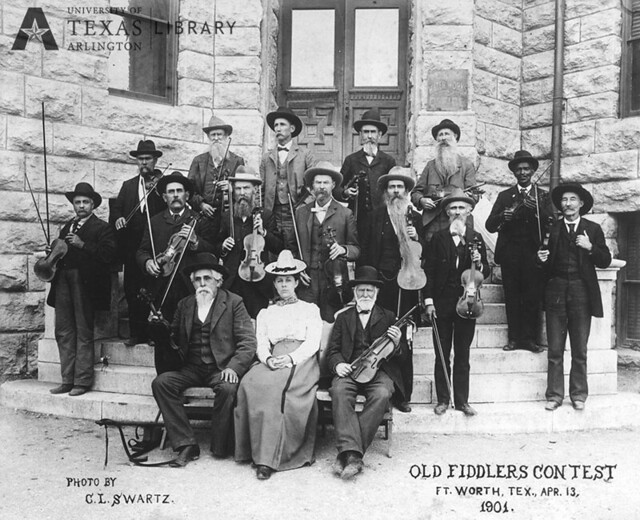
I see folks other than Anglo-Texan here, do you?

The term "Texas Fiddle" has for far too long been restricted to the very narrowest band of the contemporary "contest" culture of Anglo-Texan music. To be clear here, we're talking about music played primarily to impress a judge at a contest, so as to win a cash prize. It may have started out as something quite different, but like so many American institutions, the people who started it would be hard pressed to recognize, much less enjoy, what it has become. 

In my youth, not THAT long ago, the Fiddle Contest was held at the Country Fair where there would be prizes for champion Hog Breeding, Best Apple Pie and a display of Steam Engines and Tractors. There'd be a dance band, sometimes a polka band if it was held in a Bohemian or Moravian populated county. And coincidentally, there was a Fiddle Contest; all in good fun, with age slots for everyone from the rank beginner to actual Pros.
But things changed, gradually at first but now quite completely. The "hey let's get all the neighbors together for some family fun" element has receded, replaced with atmosphere of oft-acrimonious combat, where the weak were vanquished and humiliated in public by decidedly un-neighborly out-of-towners who made a side business of snatching prize purses wherever they could. As the context changed, so too did the music. In many way it became the perfect "kudzu" of fiddling style, and testosterone boosted version of Scots-Irish traditional tunes that appealed to the listener and in many ways washed over and drowned all the many regional styles of fiddling around the whole US, much less here in Texas. It was, and is, a "white" washing of Texas culture.

But there's always been so much more to the story and it has been one of the great joys of my life to seek out and promote these other "flavors" of Texas fiddle music. This festival marks what I hope is a sea-change in how the public see "Texas" fiddling, in all it's many shades, ethnicities and communities.

(I will relate however that this festival feels really familiar. I guess maybe its because I've been actively working with, in some cases actually discovering, 80% of the participants at this event. I guess it really is true that a "prophet has no honor in his hometown;" in my 25 years in Texas hardly any of these folks got any attention at home, but I leave for good and this happens. Not sure how to feel about that, other than to be validated in my contention that these voices are worth listening to all along. Dad always said: "Pass on the credit, but take the cash!")

I first encountered border fiderelo Jose Moreno, at a Panchanga in San Benito TX while on tour with Santiago Jimenz, Jr. and Don Walser 1995. Eventually and with much prodding got Arhoolie to cut a CD with him, which lead to an invitation teaching staff of the The Festival of American Fiddle Tunes in Pt. Townsend, (and there was that time at the Blackpot Festival his drummer didn't show up and was my first and last time as a conjunto drummer!!) His music is a genuine mixture of Native American "matachine" music, Orquestra Tipica and even classic border Tex-Mex. He's a fine accordionist and mandolinist as well and not to be missed.


A very proud Polish Papa


Union Organizer/Independent Radio DJ Frank Motley introduced me to Brian Marshall's community of familial music making over 20 years ago and in that time we've been up in Pt. Townsend twice and have appeared on many stages around the US including the Lincoln Center for the Arts,  Lowell Folk Festival and the American Folk Festival on the Bangor Waterfront. We've been playing music log enough for Brian to raise up a whole second generation of Marshall Musicians, Jakub and Mika, clarinet and fiddle respectively.
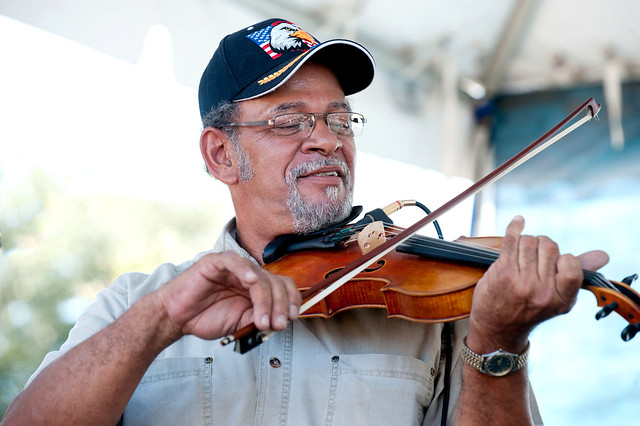


Mr. Poullard
And it was through Brian I met the amazing Ed Poullard, equally deft on fiddle or one of his very sought after hand built accordions, and his Creole community as well. Ed's one of the nicest people I have ever met and his smile shines through in his fiddle playing especially.


Seanorr.com
Though he will have his "Celtic" fiddler hat pull on tight at this event Sean Orr, one of the longest collaborators I have in the music business, and I just released a CD of our collective Texas/Oklahoma traditions called "Texas Fiddle - Okie Guitar." 

KITHFOLK said "Texas fiddler Sean Orr and Texas-based, Okie guitarist Mark Rubin say there's no "right" way to play Texas fiddle, but they're wrong. THIS is the right way to play Texas fiddle. Full of heart, brimming over with camaraderie, rough-hewn and rowdy, dusty as hell, and beholden to no man. There's a freedom in this music and a powerful sense of love. All the things that make Texas great." 


I'll let Howard Rains tell you himself how he came to his calling. 
Howard Rains
I will say it involved my apartment, his artwork, a really nice Tonk Bros. Guitar, a few glasses of Portuguese Absenthe and quite a bit of yelling and screaming. It did however lead to a controversy involving the New York Times and a series of delusional and public tirades by a very well known one-time Contest winning violinist. Really, its a great story. Ask him when you see him. Seriously.

These are just the guys I've been working with for many year however and there are plenty of mighty fine fiddlers to be heard there as well. Follow this link for more info.

In Yiddish we call the feeling I have about this event as "kvelling."

Please thing about coming out and seeing what all the hub bub is about!


11/17/14

The "Blataphone"

Or as a local instrument repair man calls them, "Fartaphones." 

New Orleans may rightly claim to the be Sousaphone Capital of the Western World but, if truth be told, it's actually the Fiberglass Sousaphone Capital of the World. They're cheaper, lighter and seemingly all stolen from a school band in Mississippi (ok, not true but true enough to be funny.) Most seem to be held together with duct tape and good intensions and I've never seen one ever even close to a hard case, much less a gig bag. The cats who play them in the street bands don their best to pump as much air through them as they can, producing, well, a great blatting roar. 

I've played them, but they're never my first choice. I was loaned a lovely older King, like the one pictured in the William Bell ad here, when I was teaching at Klez Fest UK in London. And the NCTA provided me one for my appearances with Frank London's Klezmer Brass
W/ Susan Watts @ Richmond Folk Festival
All Stars. Which was a good thing too because at the American Folk Festival in Bangor, a coastal storm came up out of nowhere during our main stage performance, making the band scatter but for reasons I'm still not sure about I just kept playing in the driving rain. I guess I subconsciously realized that wrapped in plastic, I'd be safe from a lightning strike.


I don't own one of these, but I wouldn't turn one down if you have one sitting in you garage or attic. Seriously.


11/4/14

Ross Daly on Modal Music and much, much more.

Rubinchik's Orkestyr (z"ll)
In 1996 I had the pleasure of taking my little Yiddish music band from Austin TX all the way to the south of France for a short tour and a series of performances at Le Nuits Atypiques de Langon. It's an amazing festival, curated not just musically but socially, and the musicians I interacted with there have informed much of what I know about music as a living culture. I had been there before, in 1993 as bassist for Santiago Jimenez, Jr., and was primed for this festivals tradition of purposeful admixture and cultural dialog. One of the featured artists in '96 was Ross Daly

I was really struck with him and his approach to music and collaboration. There was a young cellist from NYC who had been hired by Daly to come and perform with him, yet he had never met him before in person. The cellist, the very talented Rufus Cappadocia confessed to me how spooked he was to show up to a major event unrehearsed and just play with the featured act. But I saw the initial duet set between him and Daly that was frankly incredible, natural and real; some of the best music making I had ever encountered to that date. 

Daly showed up at the festival with a group of musicians from varied back rounds, including among others a Persian Zarb player who had at one time played for the Shah of Iran and then Khomeni after the revolution, and presented what was to all the world a very cohesive and musical presentation. A very deep cat, who I enjoyed hanging and conversing with quite a bit the week we were there.

I was just reminded of him today when a pal forwarded me his TED talk, in which he hits many of the notes that I personally have had a hard time expressing. I'm including this lecture as core material to my music students and recommend you take the short bit of time to check him out. Ross is kinda droll in his approach, but hang in there as he makes some observations that really ring true to my experience in music making and cultural connections.


Ross Daly on Modal Music:


10/13/14

From the Rubin Archives : Gil Baca Band Postcard

I had the honor of playing with Gil Baca and Vernon Drozd one time at Baca's Confectionary on the old square in downtown Fayetteville. Gil came from a long line of band leaders and the Bacova's Ceska Kapela was the first Czech-Bohemian dance band recorded in the US. Gil eventually went on to play drums for Hank Thompson among others. And sax-reed man Vernon was roundly understood to be the best "honky-tonk" player in Texas. (His son Steven is now a famous rock star bringing the Flaming Lips it's sole musical heft.)

The big octagon looking thing in the center of the picture is his dad Ray's mammoth hammered dulcimer, once the cornerstone of Czech music in Texas but now utterly disappeared in favor of the accordion in the 50's and now the pre-recorded computer track today. Vernon stands to the right of Ray, holding up the box. Kermit is on one end with his trumpet and little Gil is at the other.

Strangely, they are pictured in front of the only brick building on the square as Fayetteville features one of Texas' last remaining all wooden downtowns. This band made a big splash playing the Smithsonian Institution's American Folklife Festival, a short tour of  Czechoslovakia in 1972 and also performed at the United States Bicentennial Celebration in Washington, D.C., in 1976. 


10/6/14

Bad Livers "Ghost Train" Sheet Music from Sing OUT! Magazine, Jan. 1995

In hindsight, we gave mighty snarky responses to the venerable old folkie magazine. Didn't stop them from publishing our music, giving us consistently positive reviews (up until Blood and Mood which stopped everybody in its tracks,) and eventually hiring me to write not one but two major pieces for them. (The Klezkamp Mitzvah and Charlie Poole: the Man at America's Country Roots.) They did get back at us by outing Danny and myself as members of Dallas' Killbilly, which we hadn't been in for nearly 6 years by this point, but that's about the speed of light travels in folk land it seems.

The "you look good in a Bad Liver T-shirt" was our constant mantra, BTW. Shows up frequently in our interviews. We sold so many t-shirts, really crazy amounts that people today can't imagine. It was for many years our largest source of income and allowed us the creative freedom to do whatever we liked. 
On to the original article:


10/1/14

Interview as a Bad Liver for a Macedonian Punk rock fanzine, 1996

Bad Livers Interview for "Factory Smog is a Sign of Progress," most likely the very first emailed interview for print media I had done. There's a few laugh riots to be found. Enjoy!

(PS: the three quotes at the end of this article were lifted from my email signature.)